
Solutions
Solar pumping solutions,
by water source and by duty
Seven entries into a solar pumping system, each one opened from the water a site has and the work the pump has to do. This is a way into the range rather than a list of models: the pump, the drive and the array follow from the source and the duty.
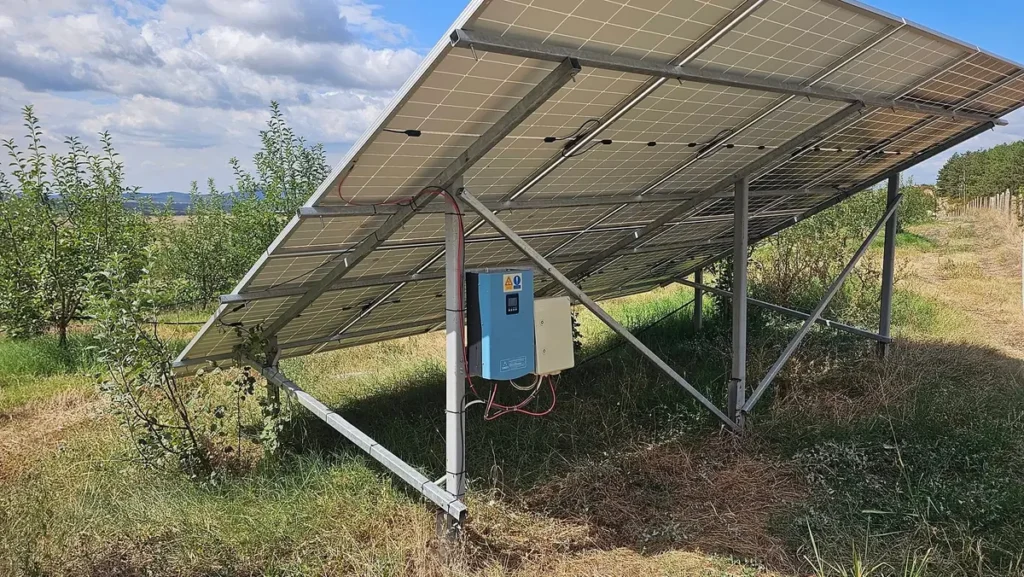
Solar pumping installation in the field
01 / Conversion
Convert AC pumps to solar
The pump a site already runs stays where it is and the energy behind it changes. This is the AC route: the motor is not replaced and no new pump is bought.
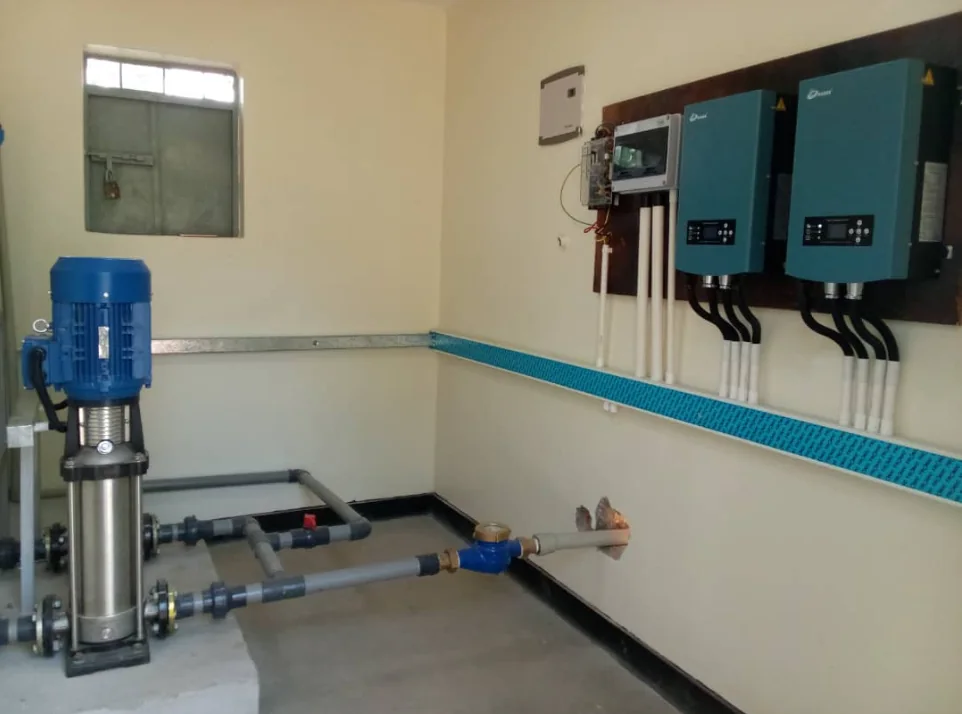
A site that already has an AC pump does not have to replace it to run from an array. The pump, the pipework and the water it moves stay as they are; what changes is the drive in front of the motor.
A HOBER solar pumping inverter is placed between the PV array and the existing AC motor. The array feeds the inverter, the inverter drives the motor, and the pump moves the water as it did before.
Compatibility is checked before anything is recommended. The motor nameplate, the duty the pump has to meet and the array are read together, and the configuration is confirmed for the site rather than assumed from a list.
- The existing AC pump stays
- A HOBER inverter drives it
- The array is sized to the duty
- Checked against the motor nameplate
02 / Wells & boreholes
Deep-well solar pumping
The pump stands below the water level in the hole and lifts the water to the surface. The hole, the water level and the duty point decide the pump; the line it comes from decides how it is driven.
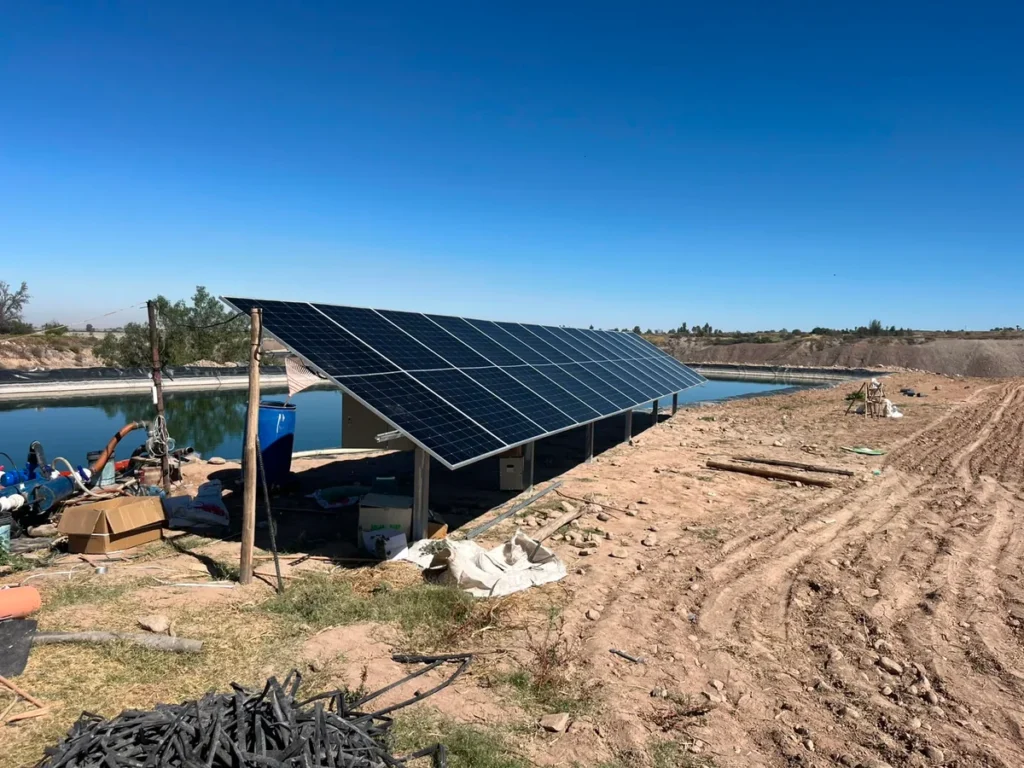
A borehole or a well is served by a submersible pump that sits below the water level and pushes the water up through a riser pipe. The array and the drive stay at the surface, and the water is lifted to a tank, a line or a field.
Two routes are offered for this source, and they are alternatives rather than a ranking. Which one is quoted follows from the borehole, the duty point and the equipment the site can service.
The borehole is read first — the hole it gives, the depth and the water level it stands at — because the pump has to fit the hole before anything is said about the array.
- AC route An SP series deep-well pump with a HOBER solar pumping inverter. The pump is an AC pump, and the inverter is what the array drives.
- BLDC route A BLDC deep-well pump with its own dedicated controller. The controller belongs to that pump system rather than being an inverter for an AC motor.
Both routes are set out on their own pages: the AC route on the AC solar water pumps page and the BLDC route on the BLDC solar water pumps page. Neither route is the better answer on its own — the borehole, the duty and the service the site can call on decide which one is quoted.
03 / Rivers, lakes & reservoirs
River & surface water pumping
Water is taken from an open source and the pump station stands above the water surface, so the suction side is part of the duty rather than a detail beside it.
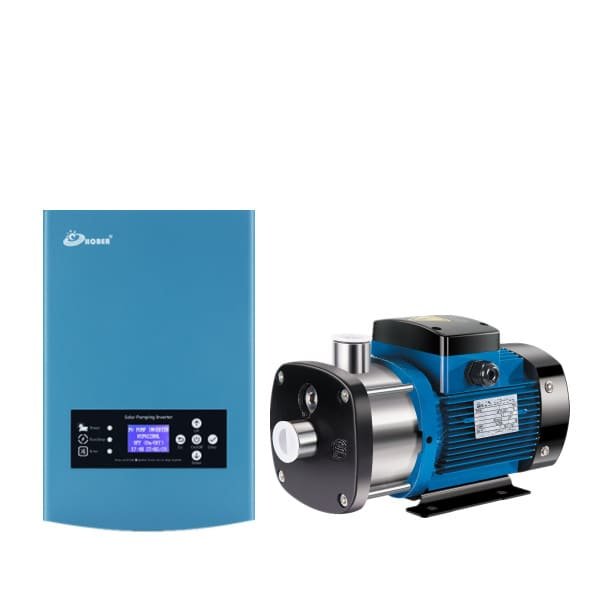
Where the water is a river, a lake, a reservoir or a canal, the pump stands on the bank or on a platform above the water and draws the water up into the pump through a suction line.
Because the station sits above the water, the suction lift, the priming the installation needs and the pipework on the suction side are read together with the flow and the head. A station set too high for its pump is where a surface system is decided wrongly.
The AC line carries NIS, NB, ZS and ZW surface pumps — ZW is the self-priming type in that list — and the BLDC line carries surface pumps of its own.
- Pump station above the water
- Suction lift read with the duty
- NIS / NB / ZS / ZW, or a BLDC surface pump
04 / Irrigation
Solar irrigation
An irrigation system is asked for a flow at a pressure, and both have to match the way the water is applied and the crop it is applied to.
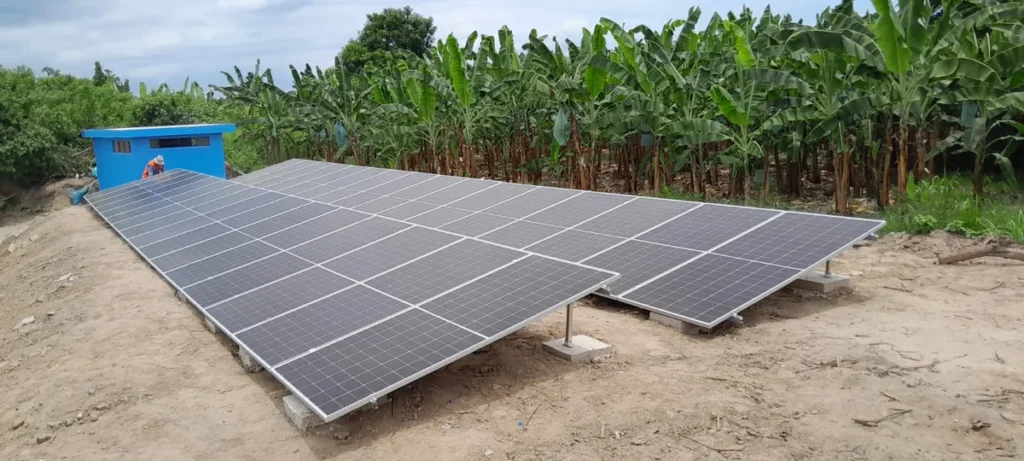
Drip, sprinkler and surface irrigation each ask for a different combination of flow and pressure, so the pump is read against the method and the crop rather than against the area alone.
The duty point is what the array has to carry: the flow, the total head and the pressure the emitter or the sprinkler needs at the end of the line.
The pump, the drive and the array are then chosen together. The online selection narrows the range from the duty point, and the quotation confirms what the site will be built with.
- Drip, sprinkler or surface
- Flow and pressure read together
- The array carries the duty point
05 / Tanks, pipelines & pressure
Booster & pressure systems
Stored water is moved between tanks or held at pressure in a line, so the pump works against a pressure rather than a lift out of a hole.
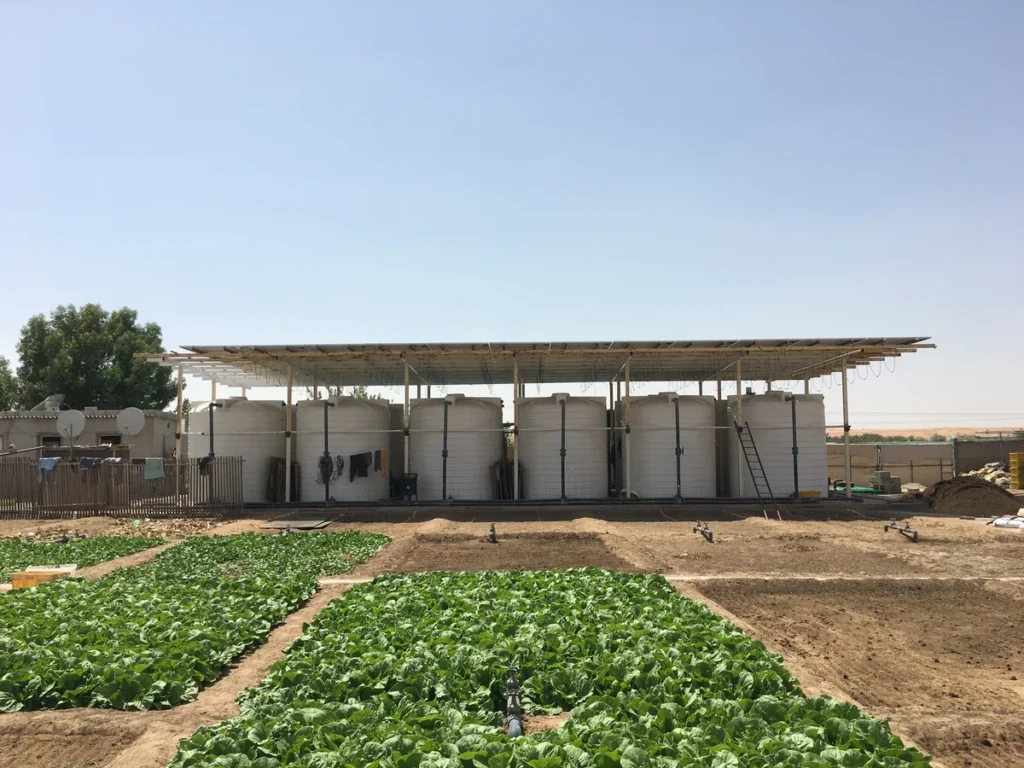
A booster set takes water from a tank, a reservoir or a main and holds pressure in the line downstream, so the duty is a pressure and a flow rather than a lift.
The AC line carries ND and CHL booster pumps for this work, and the drive in front of them is a HOBER solar pumping inverter, which is what lets a pressure duty run from an array.
PID / constant pressure control is stated by HOBER for the models that carry it, so a line that has to hold a steady pressure is quoted on a model that does rather than assumed across the range.
- ND / CHL booster pumps
- Pressure held in the line
- PID / constant pressure, per model
06 / Wet wells, sewage & drainage
Wastewater & drainage
Water that carries solids is lifted out of a wet well or a sump and discharged, which asks for a pump built for that water.
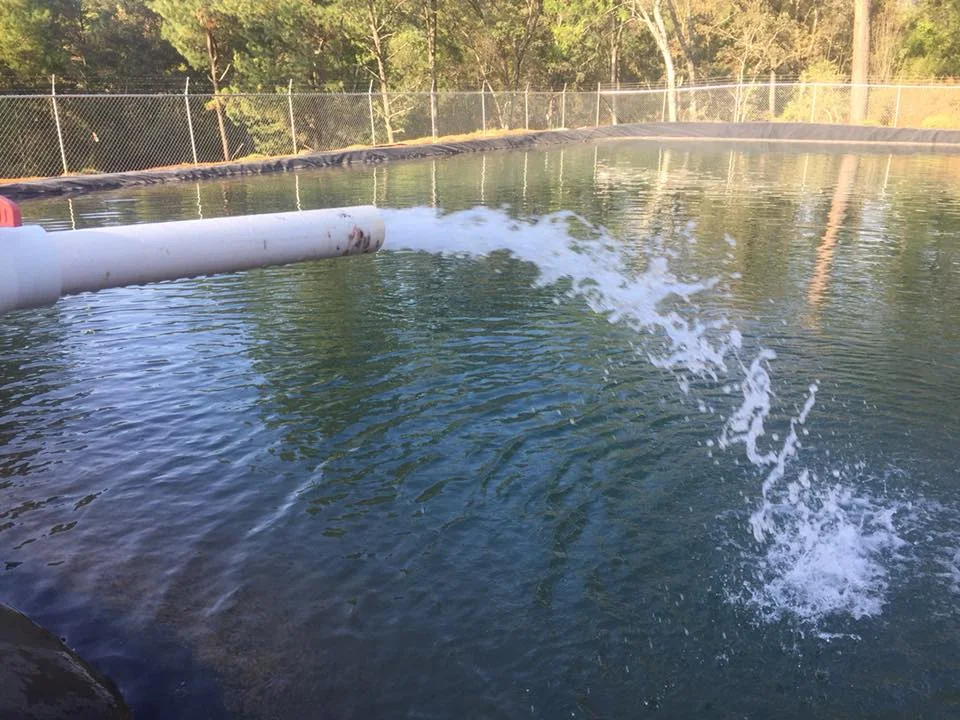
A drainage or wastewater duty is entered from the wet well: the pump stands in the water it moves and lifts it out through a rising main to the discharge point.
The route offered here is the AC one: a WQ submersible sewage pump driven by a HOBER solar pumping inverter.
The well depth, the flow and what the water carries are read before a pump is named, and where the water is discharged is part of the duty rather than an afterthought.
- WQ submersible sewage pump
- A HOBER inverter drives it
- Well depth and flow read first
07 / Solar with a backup supply
Hybrid solar pumping
The array is the main supply and a grid or a generator feed is an optional second input to the same inverter.
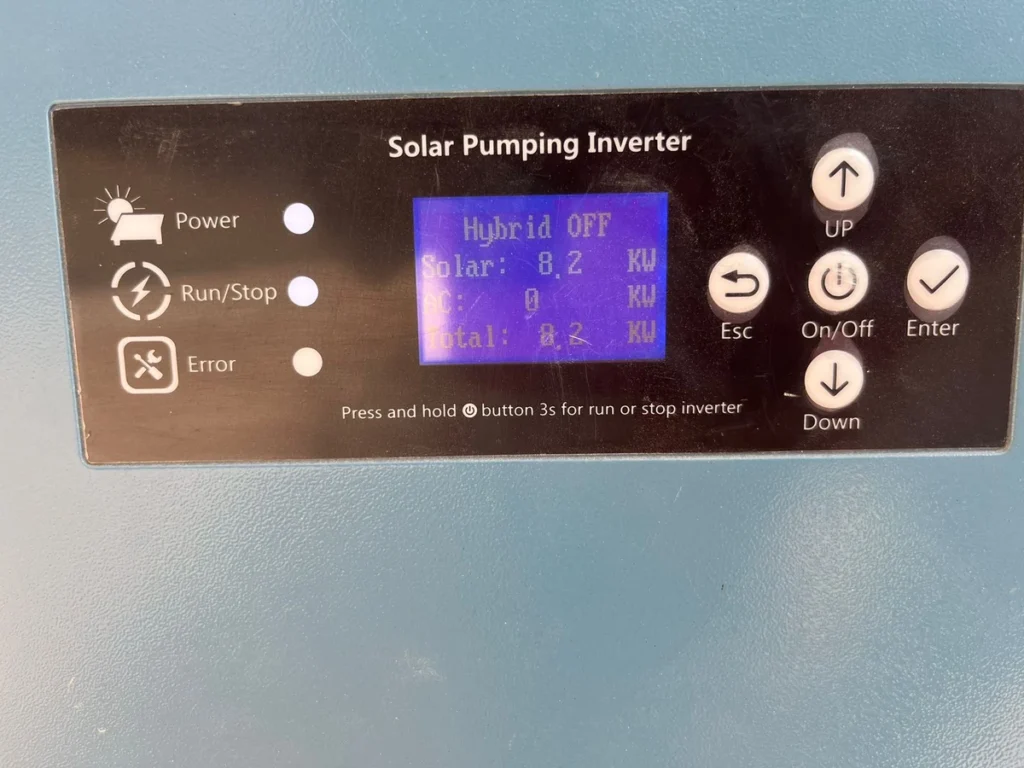
A hybrid system is built on the AC route: a HOBER solar pumping inverter drives the AC pump, and where the model carries a hybrid input the same inverter also accepts an AC supply.
The array stays the main supply. The grid or the generator is what the site falls back on when the array cannot carry the pump, rather than the supply the system is sized around.
Whether a model supports a hybrid input depends on the model. It is stated per model in the inverter datasheet rather than for the range as a whole, and it is confirmed in the quotation.
- Array as the main supply
- Grid / generator as an optional input
- Hybrid support stated per model
Technical documents
Catalogues, parameter tables and solution guides
The documents behind the routes on this page are published in one place, filed by the product and the series they belong to.
Next step
Start from your water source.
Or from the work it has to do.
Tell us where the water comes from, what the pump has to deliver and what the site can service. The selection narrows the range; the quotation confirms the pump, the drive and the array for your site.