
Solar + grid / generator
Hybrid Solar Pumping
Solution
Use solar as the primary energy source and keep a grid or a generator available when pumping has to continue beyond solar conditions. HOBER matches the drive to the pump the site already runs, or to the duty of a new project, for distributors, installers and project contractors.
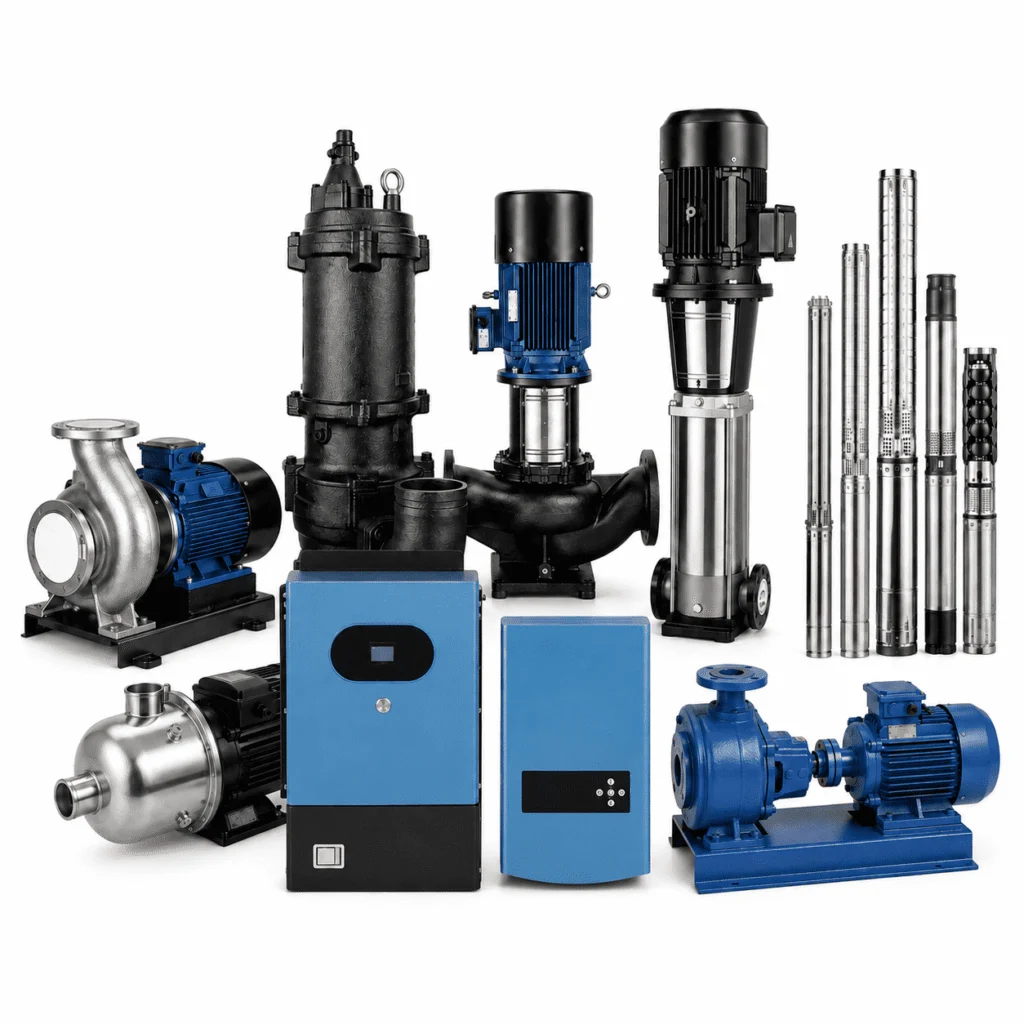
A hybrid solar pump set on site
The system
From the Array to the Water Delivered
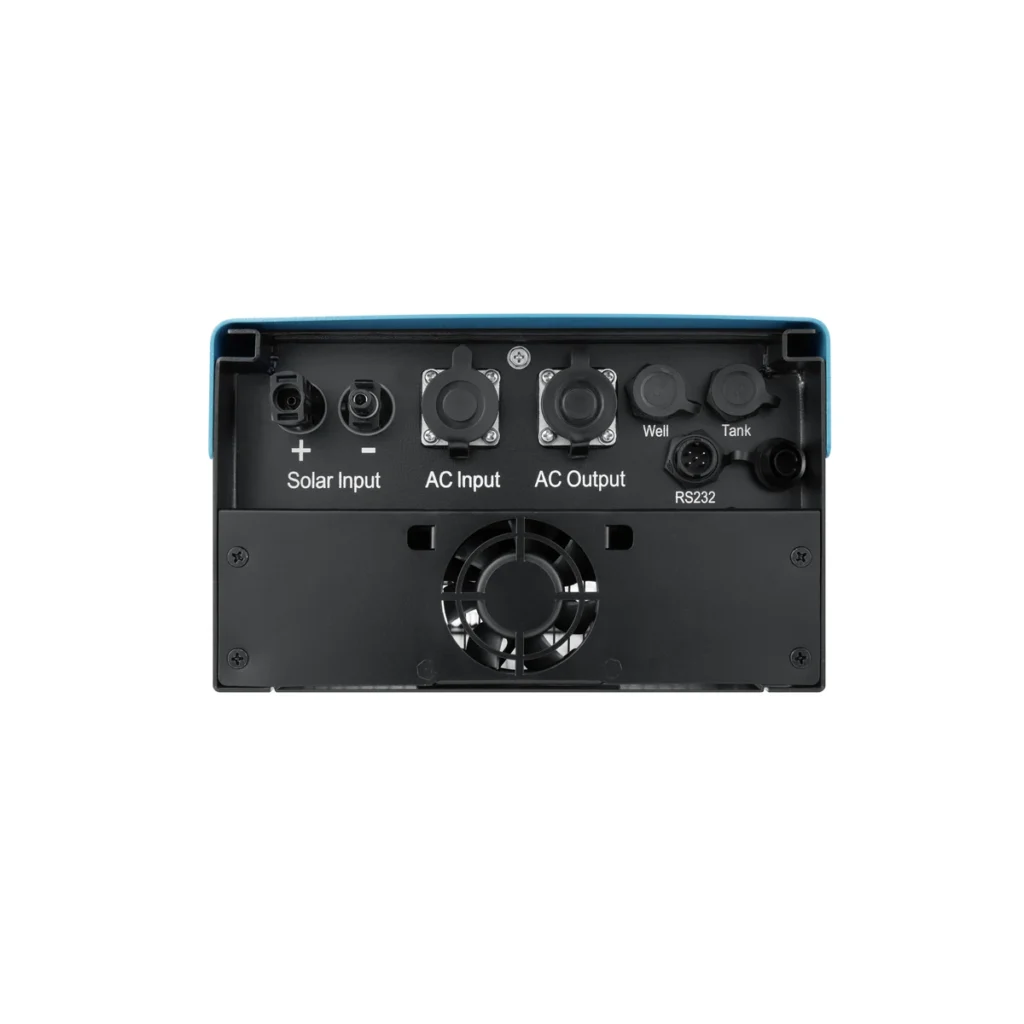
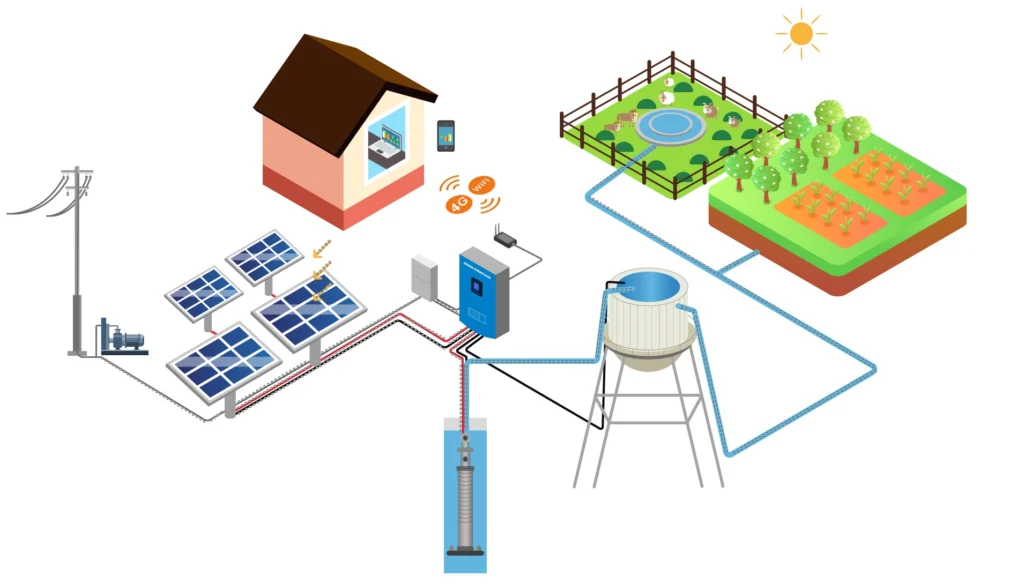
The array feeds the drive that runs the pump, and a grid or a generator joins the same drive as a backup input where the model carries one.
-
Solar PV array (the main supply) Generates DC power from sunlight and is the supply the system runs on.
-
HOBER solar pumping inverter The drive: it runs the AC pump from the array and, where the model carries a hybrid input, takes a grid or generator supply as backup. Control includes MPPT, soft start and soft stop, dry-run and level protection, system protection and optional remote monitoring where the model carries it.
-
AC pump The pump the drive runs: an AC pump already on site and kept in place, or one selected for a new project.
-
Water delivery Carries the pumped water to the point it is used or stored.
The array is the supply the system runs on. A grid or a generator input is a backup to the same inverter, so the two are configured together rather than the system being sized around the backup.
Engineering challenge
Solar First. Backup When Needed.
The duty and the motor decide the drive; the array is what the system runs on.
A hybrid project cannot be read on pump power alone. The duty the pump has to meet decides the drive, and the motor on the pump — its voltage, its phase and its rated current — decides whether that drive can run it at all. The array is the supply the system runs on, and a grid or a generator is a second input to the same inverter, so what the backup has to cover is settled with the drive rather than around it.
- Pump power What power does the pump motor carry?
- Motor voltage What voltage does the motor run at?
- Phase Is the motor single-phase or three-phase?
- Rated current What is the rated current of the motor?
- Grid / generator supply What supply does the site keep alongside the array?
- Required operating hours How many hours a day does the pump have to run?
Is the motor data enough?
The pump duty and the motor data are what a drive is matched on, and the model states which inputs it carries. Hybrid input availability and switching behaviour are confirmed by the inverter model and the project configuration.
Project data
Project Data We Need
The figures the pump, the drive and the array are matched on, and where each one is read.
The pump
- Pump power kW, from the nameplate
- Motor voltage V, from the nameplate
- Phase single-phase or three-phase
- Rated current A, from the nameplate
- The model or the nameplate figures a photograph of the nameplate is the shortest way to be exact
The duty
- Required flow m³/h
- Required total head m, including the pipe loss
- Daily demand m³ a day, and what the water is used for
- Operating hours a day h/day the pump has to run
The supply
- The PV array as the main supply the array the system runs on
- Grid or generator V and Hz, where the site keeps one
- Pump already on site an existing pump to keep, or a new selection
System matching
From Project Data to System Matching
HOBER reads the pump duty, the motor data and the supply conditions against the range and matches the drive, the pump and the array to them.
- Project data
- HOBER matching
- The system
Example
Example project data
- Pump power
- 7.5 kW
- Motor
- 380 V, 3-phase
- Required hours
- 8 h/day
- Backup
- Grid, 380 V
The system the data resolves to
- AC pump
- Hybrid solar pumping inverter
- PV configuration
- System protection
The figures are an illustrative example of how a project is read, not a product claim: the duty and the motor decide the drive. Whether a system can take a grid or a generator input is stated by the inverter model and confirmed for the project.
Product data
Need inverter specifications, models or curves?
The models, the technical specifications and the performance curves are published with the range, and each model states the pump voltage, phase and power it takes and the inputs it carries.
Models · Specifications · Q-H curves · Technical data
Applications
Where Hybrid Systems Are Used
-
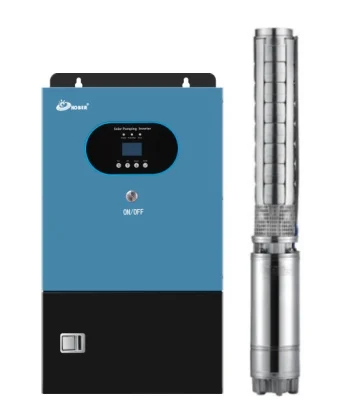
Hybrid solar pump sets on site
A pump running through the solar window with the drive and the array behind it.
-
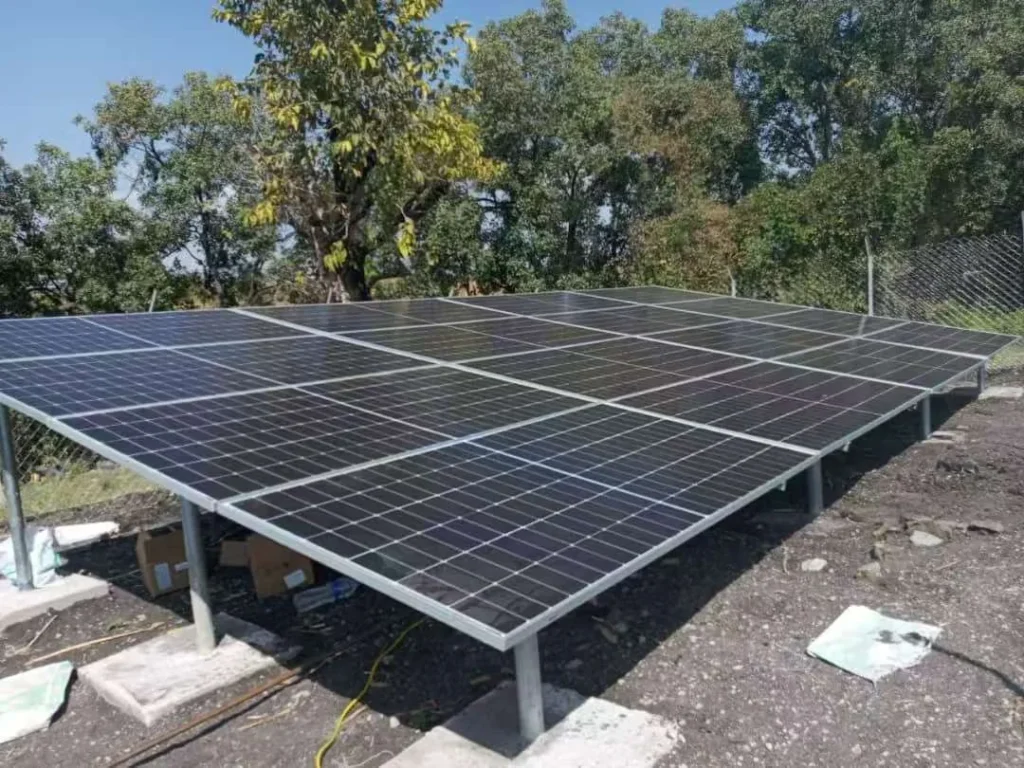
The array on its mounting
The array that supplies the system, on the frame it stands on.
-
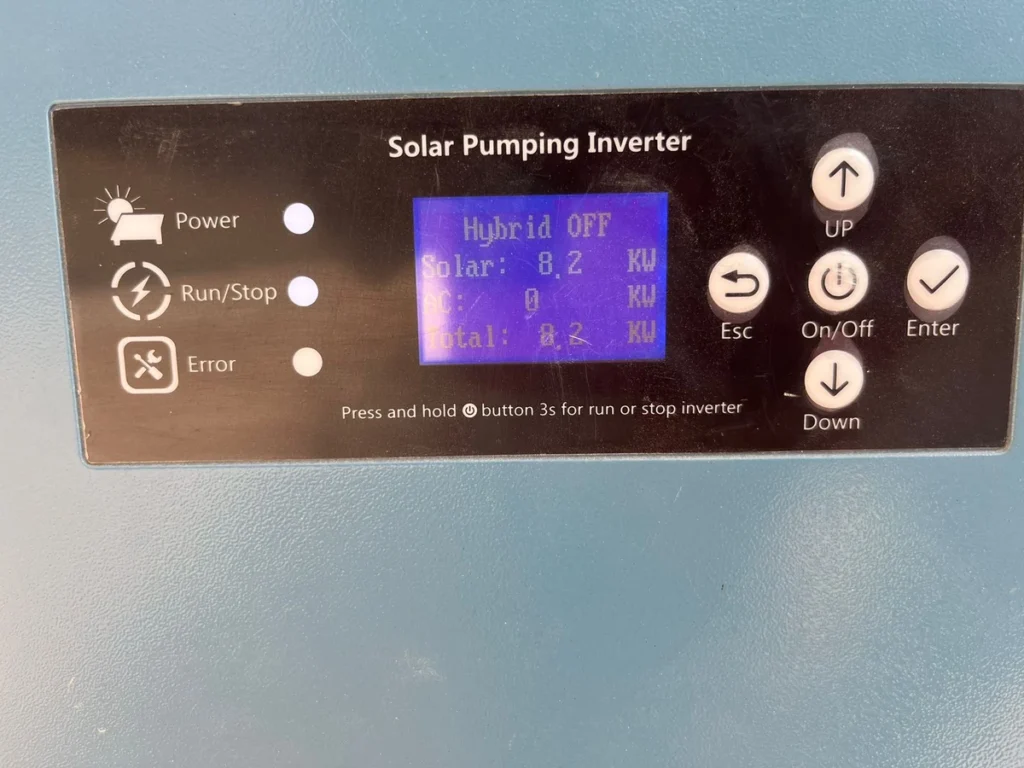
The inverter in service
The drive on site, where the array and the backup input meet.
-
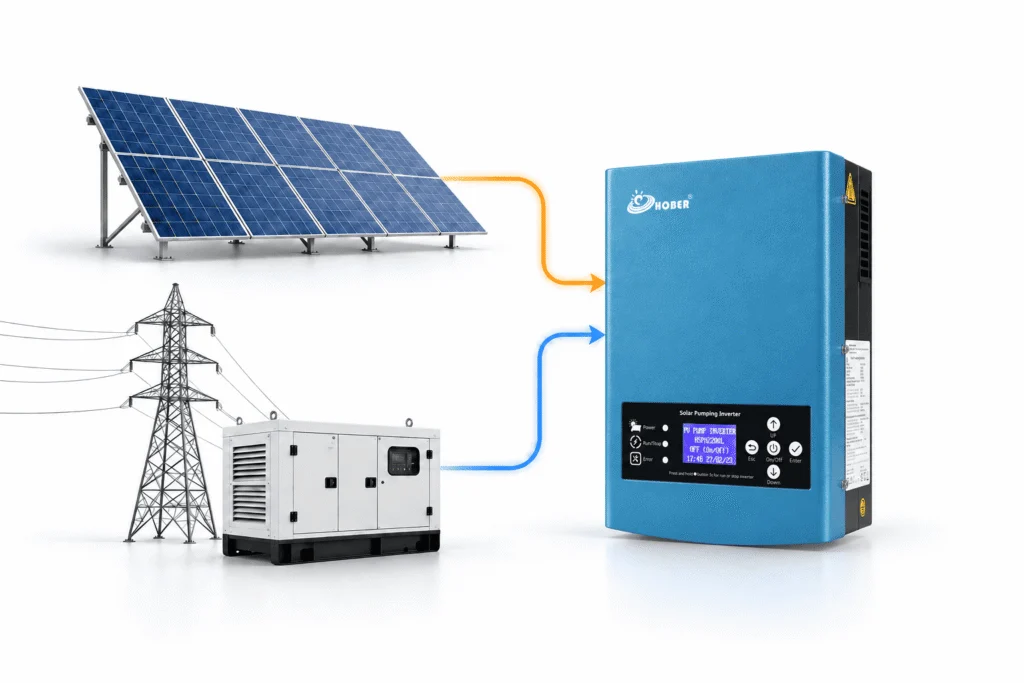
Where the backup joins
The inverter wired to the array and to a grid or generator input.
Installations
Installations in Service
Photographs of HOBER equipment on site.
-
The inverter and the pump it drives. -
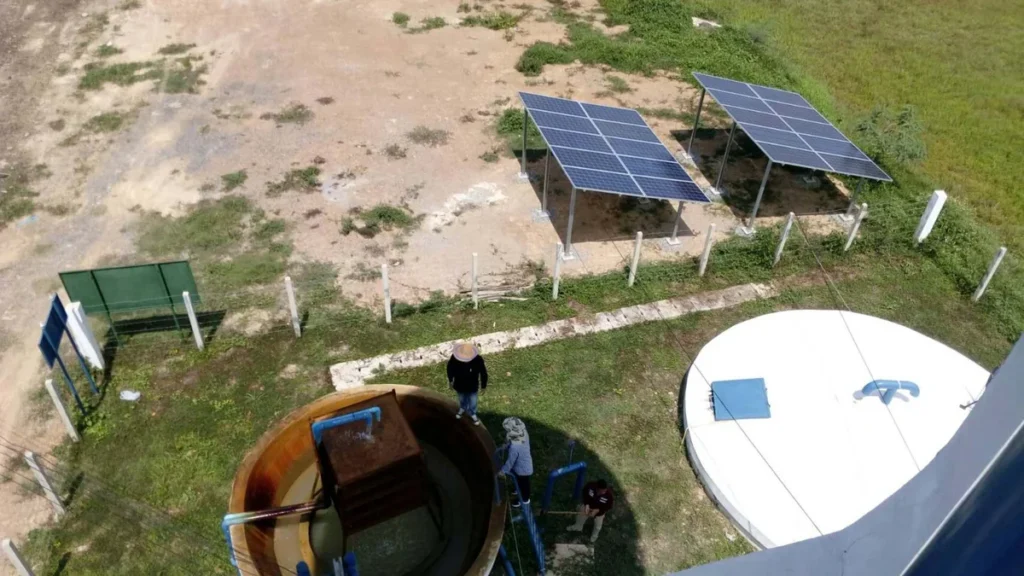
Storage and the array in one view. -
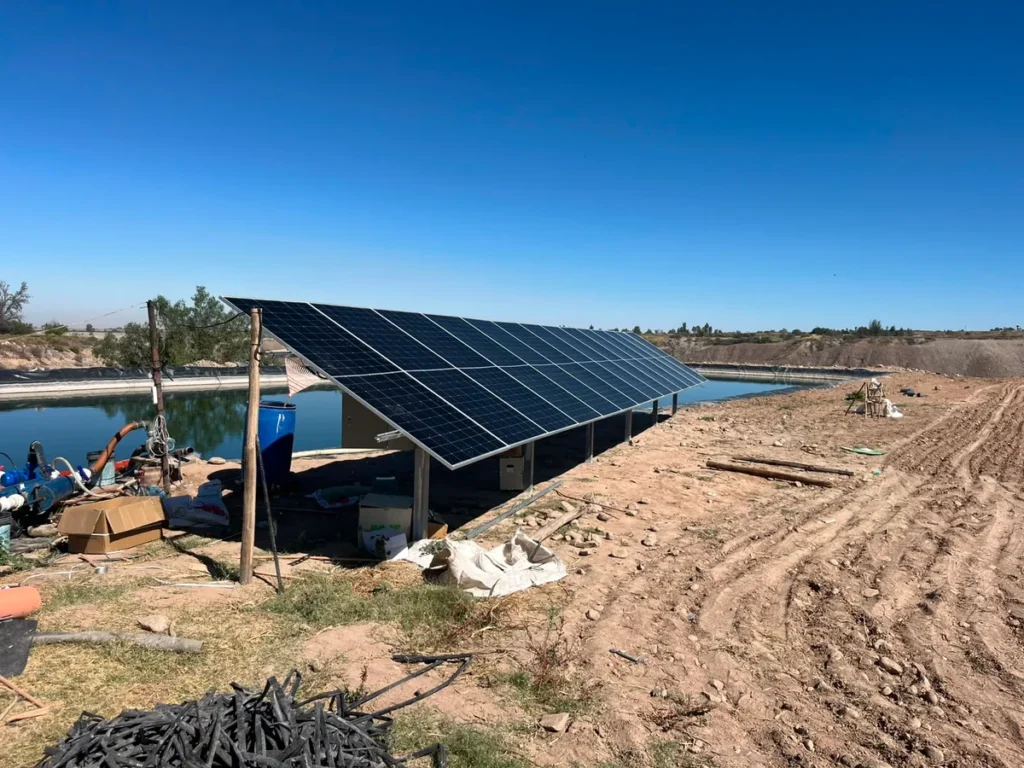
A solar pumping station on a remote site.
Support
System Matching Support Before Installation
The pump is only one part of a reliable hybrid pumping system.
HOBER works on the system rather than the pump alone, from the project data to commissioning.
-
The system
Hybrid solar pumping system
- PV array
- Inverter / controller
- AC pump
- Water delivery
- Pump Matching Read the pump power and the duty against the pump performance, for the pump on site or for a new selection.
- PV Sizing Configure the PV array as the main supply, according to the drive and the pump it runs.
- Inverter / Controller Matching Match the motor voltage, phase and power to the correct solar pumping inverter, and confirm the hybrid input where the site keeps a grid or a generator.
- System Design Coordinate the pump, the inverter, the array, the backup input and the system protection.
- Installation Guidance Support wiring, hybrid input configuration, parameter settings and commissioning.
- Troubleshooting Support Technical support for distributors and installers when a site issue occurs.
Support for the people who do the work:
FAQ
Water Storage for the Night and for Cloudy Days
The question that follows the supply: how much water the site has to hold, and what it has to be able to refill.
How should tank capacity cover the night and a run of cloudy days?
Size the usable storage on the largest gap between what the site uses and what the pump can put back, over the period the site has to ride through: the night demand, a run of cloudy days and the reserve that has to stay in the tank are one figure, not two. As an illustration, two days at 10 m³ a day with no pumping need 20 m³ of usable storage, and the night demand is already inside each day’s total. Check that the pump can refill the tank afterwards and that the tank’s height and the delivery pressure suit the point of use — a tank does not pressurise a line on its own.
Hybrid projects
Have a Pump that Has to Keep Running?
Send the duty the pump has to meet, the motor data and the supply the site keeps. HOBER can help match the drive to an existing AC pump, or to the duty of a new project.
Project inquiry
The pump, the motor and the supply
For distributors, installers and project contractors. Any figure may be left open — what is missing we confirm with you before the system is quoted.