
Wet wells • sewage • drainage
Wastewater & Drainage
Solar Pumping Solution
Lift wastewater or drainage water from wet wells and sumps with a system selected for the liquid, the solids and the hydraulic duty. HOBER matches the wastewater pump, the solar pumping inverter and the PV configuration for distributors, installers and project companies.
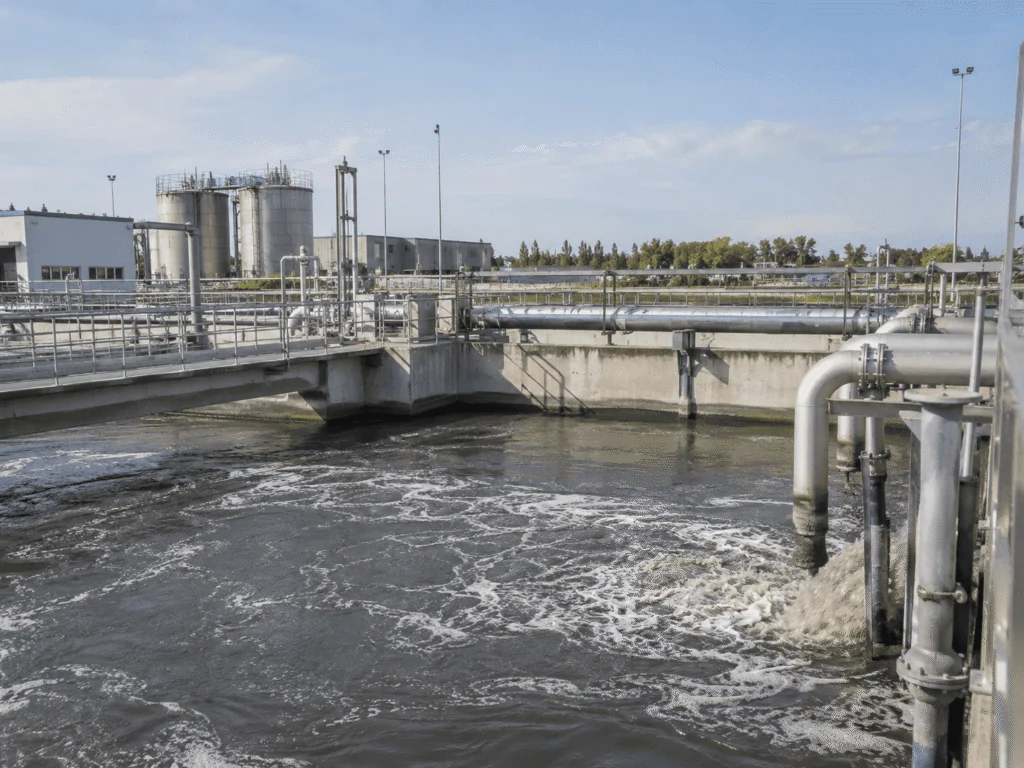
A wastewater water source
The system
From the Wet Well to the Discharge
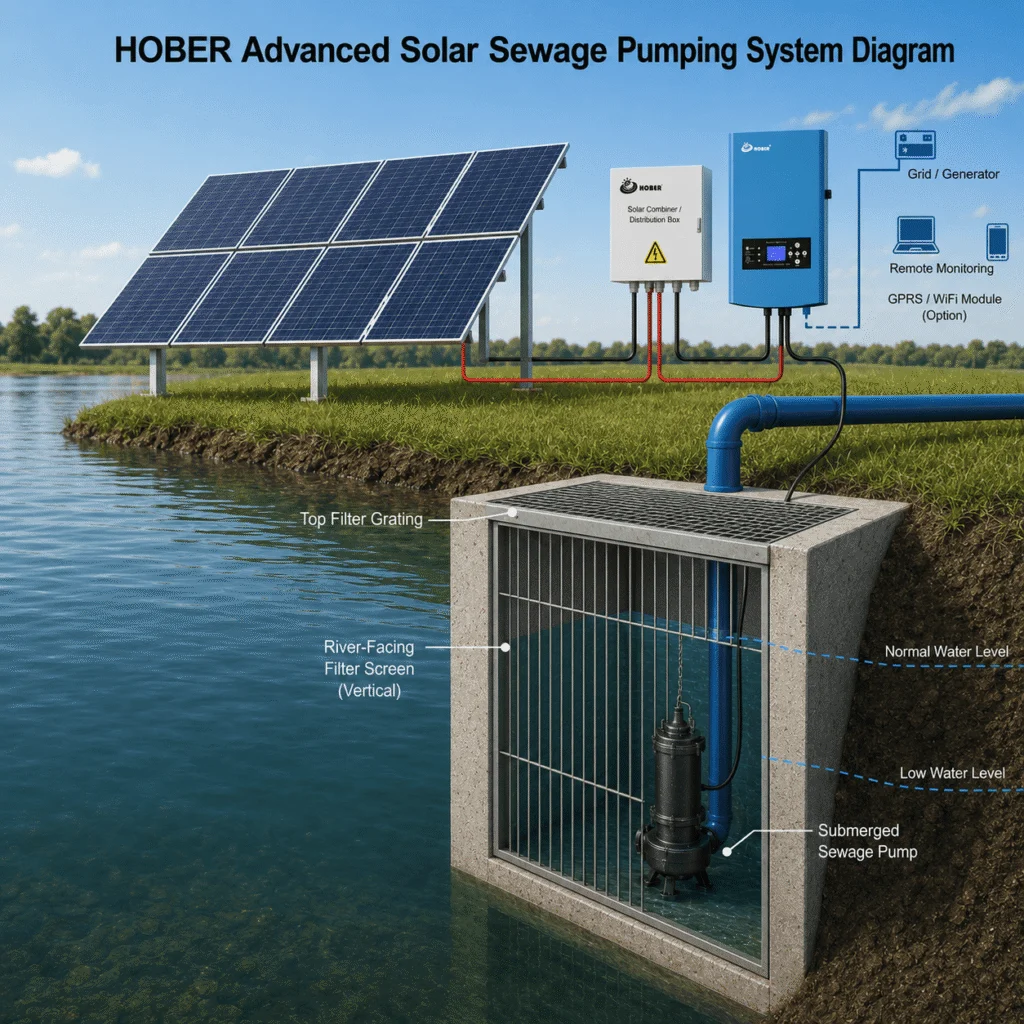
The pump stands in the water it moves and lifts it out through a rising main, while the array and the drive stay at ground level.
-
Solar PV array Generates DC power from sunlight.
-
HOBER solar pumping inverter Controls pump operation and adapts to changing solar input. Control includes MPPT, soft start and soft stop, dry-run and level protection, system protection and optional remote monitoring where the model carries it.
-
Wastewater pump Stands in the wet well and passes what the water carries out of the well.
-
Rising main delivery Carries the water out of the well to the discharge point.
The pump models, their figures and their curves are published with the range. The pump is matched into the system as a whole, together with the drive and the array.
Engineering challenge
Wastewater Is Not Clean-Water Duty
What the water carries decides the pump as much as the head does.
A drainage duty cannot be read on flow and head alone. The liquid and what it carries — the solids and the free passage the pump has to pass — decide which pump may stand in that water at all, and the depth of the well, the level the water works between and the head out to the discharge decide its setting. A pump chosen for clean water is a pump chosen for another duty.
- Liquid type Domestic sewage, industrial wastewater or stormwater
- Solids and free passage What is the largest particle the water carries?
- Required flow How much water has to be moved?
- Total head How far is the water lifted from the working level to the discharge?
- Wet well depth How deep is the well the pump stands in?
- Discharge pipe length and diameter How long is the rising main out to the discharge point, and what diameter is it?
Not sure about the head?
The pipe friction loss calculator works out total dynamic head from the static head, the pipe friction loss and the fittings loss.
Project data
Project Data We Need
The figures the pump, the drive and the array are matched on, and where each one is read.
The water
- Liquid type domestic sewage, industrial wastewater or stormwater
- Solids and free passage mm, and what the water carries
- Working level the levels the pump starts and stops between, m
- Conditions temperature or anything else the liquid brings with it
The duty
- Required flow m³/h
- Total head m to the discharge point
- Wet well depth m
- Discharge pipe length and diameter m and mm
The site and the supply
- Wet well dimensions the well and the sump it draws from
- Pump already on site an existing pump to keep, or a new selection
- Power source solar only, solar + grid, or solar + generator
- Control the site asks for level control, dry-run protection or a duty the site already runs
System matching
From Project Data to System Matching
HOBER reads the liquid, what it carries and the head against the range and matches the pump, the drive and the array to them.
- Project data
- HOBER matching
- The system
Example
Example project data
- Flow
- 20 m³/h
- Total head
- 18 m
- Wet well depth
- 4 m
- Liquid
- Sewage, with solids
The system the data resolves to
- Wastewater pump
- Solar pumping inverter
- PV configuration
- System protection
The figures are an illustrative example of how a project is read, not a product claim: the liquid, what it carries and the head decide the pump.
Product data
Need wastewater pump specifications, or the inverter data?
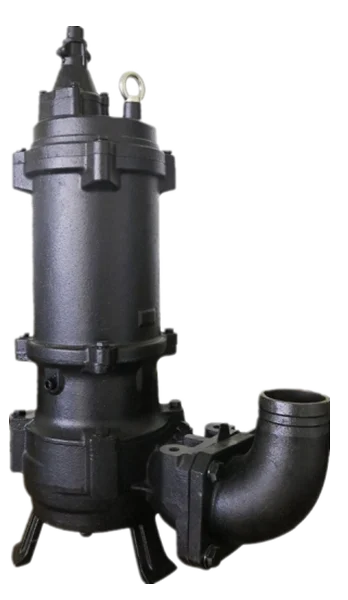
The models, the technical specifications and the performance curves are published by series. The pump range is organised by the duty it serves, and the wastewater and drainage pumps are published in the submersible sewage pump group.
Models · Specifications · Q-H curves · Technical data
Applications
Where Wastewater and Drainage Systems Are Used
-
Wet wells and drainage pumping
The water a drainage station has to lift, at the well the pump stands in.
-
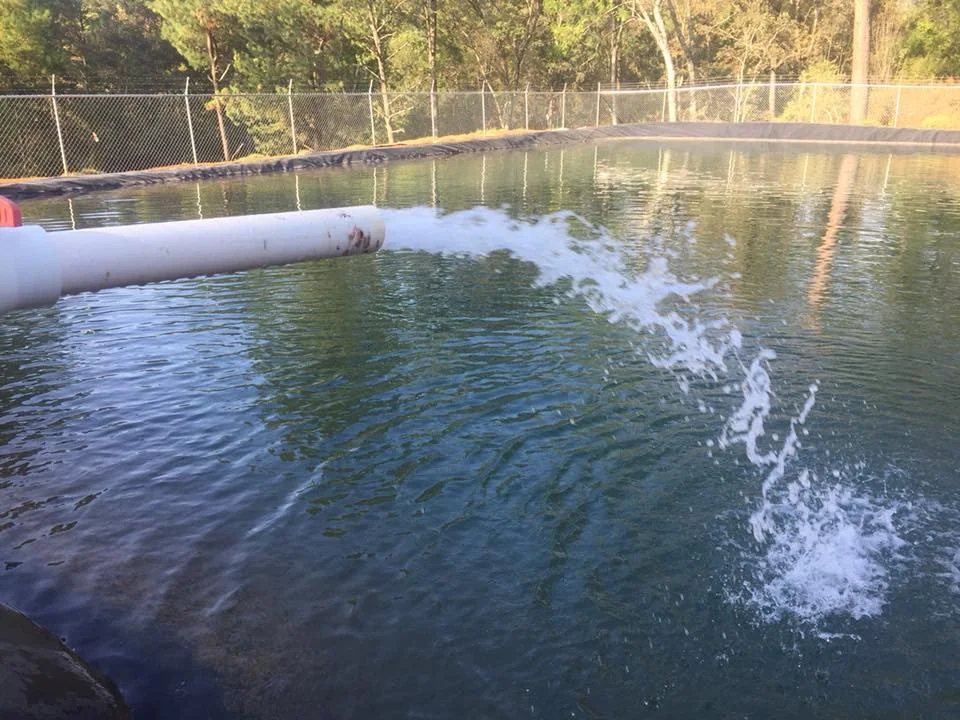
Discharge and surface drainage
Water carried along the line to the point it is discharged at.
-
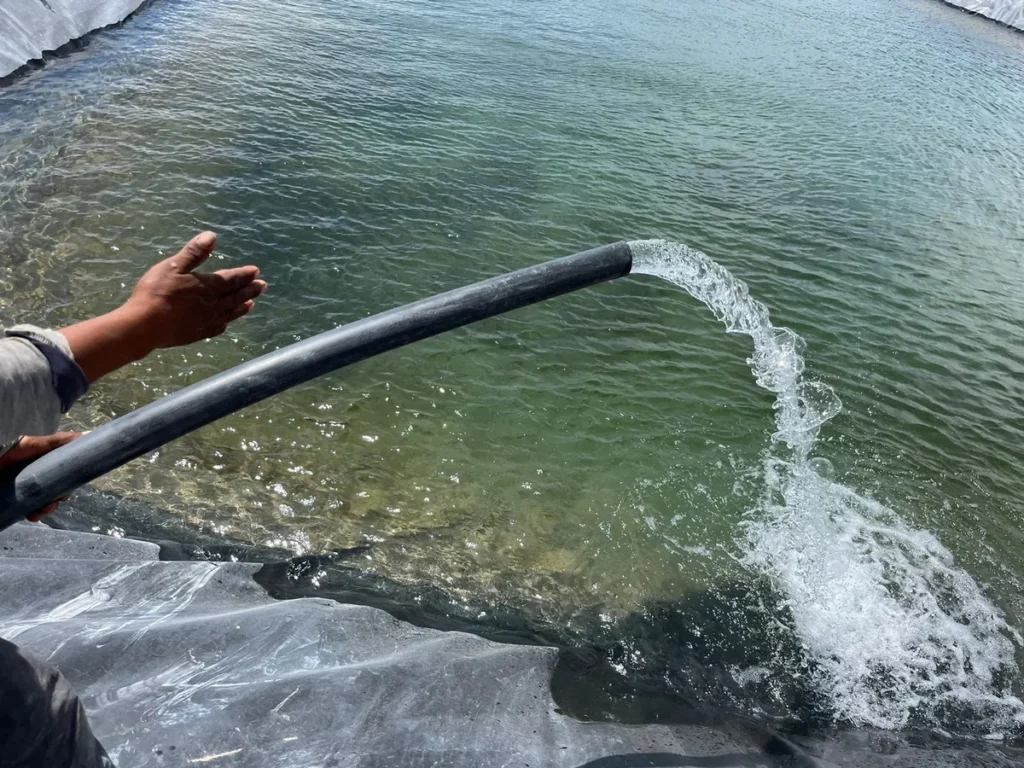
The water at the point of discharge
The water leaving the system at the end of the line.
-
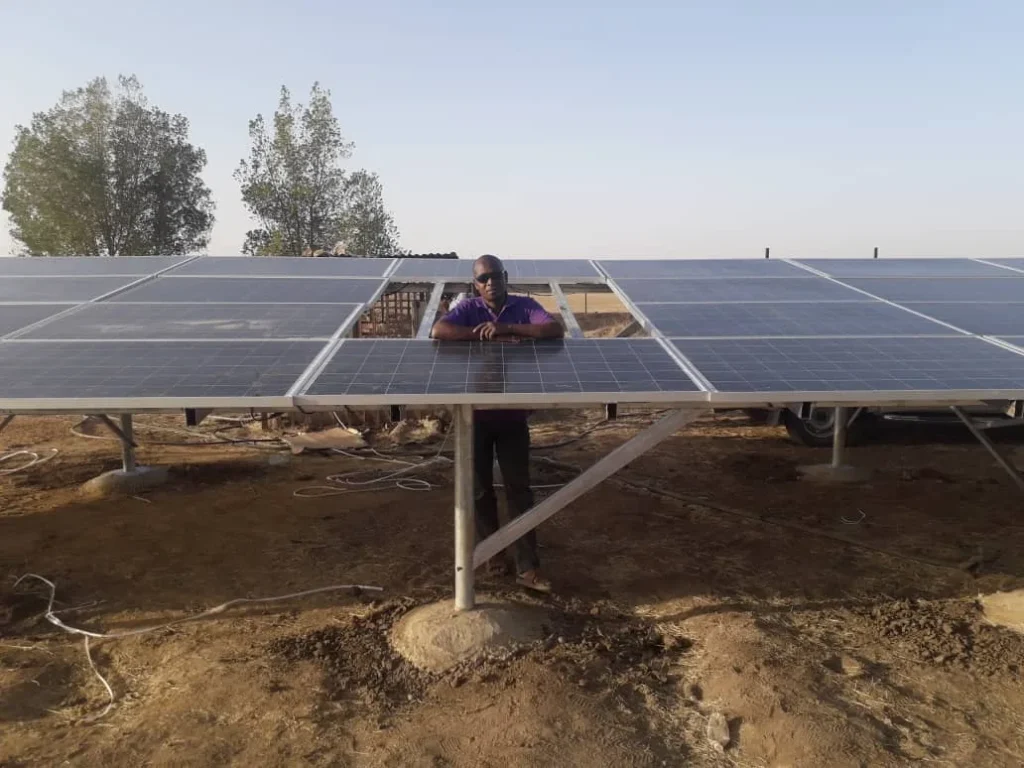
The array at the pumping site
The array a project drainage station runs on.
Installations
Installations in Service
Photographs of HOBER equipment on site.
-
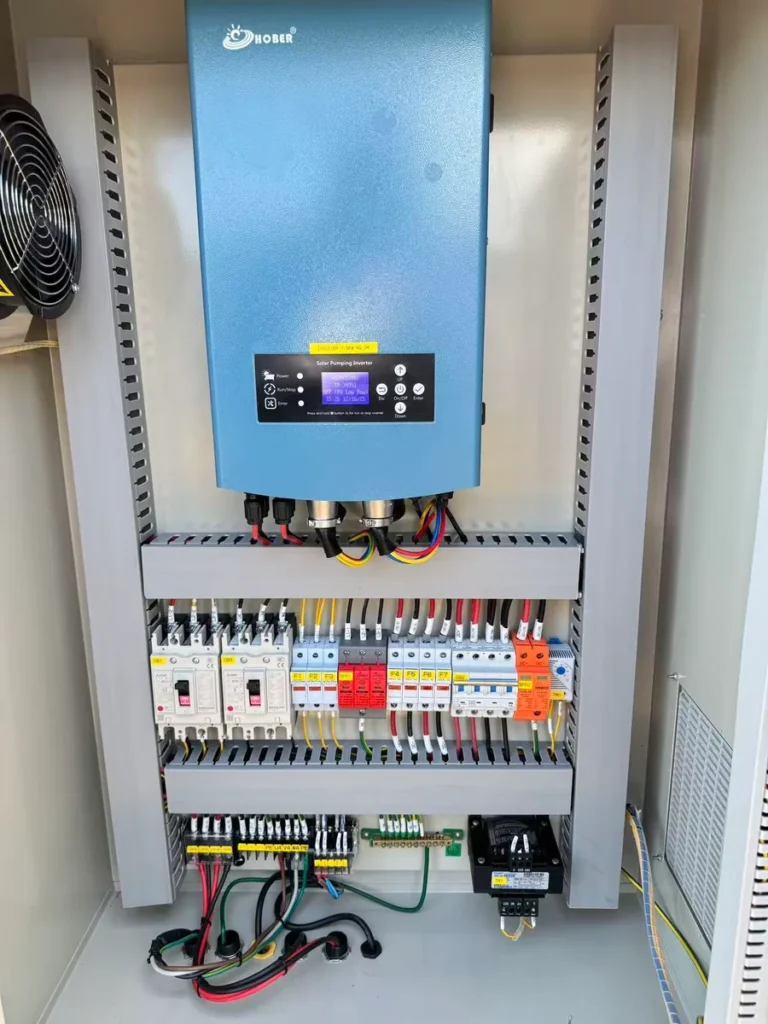
A control cabinet in the field. -
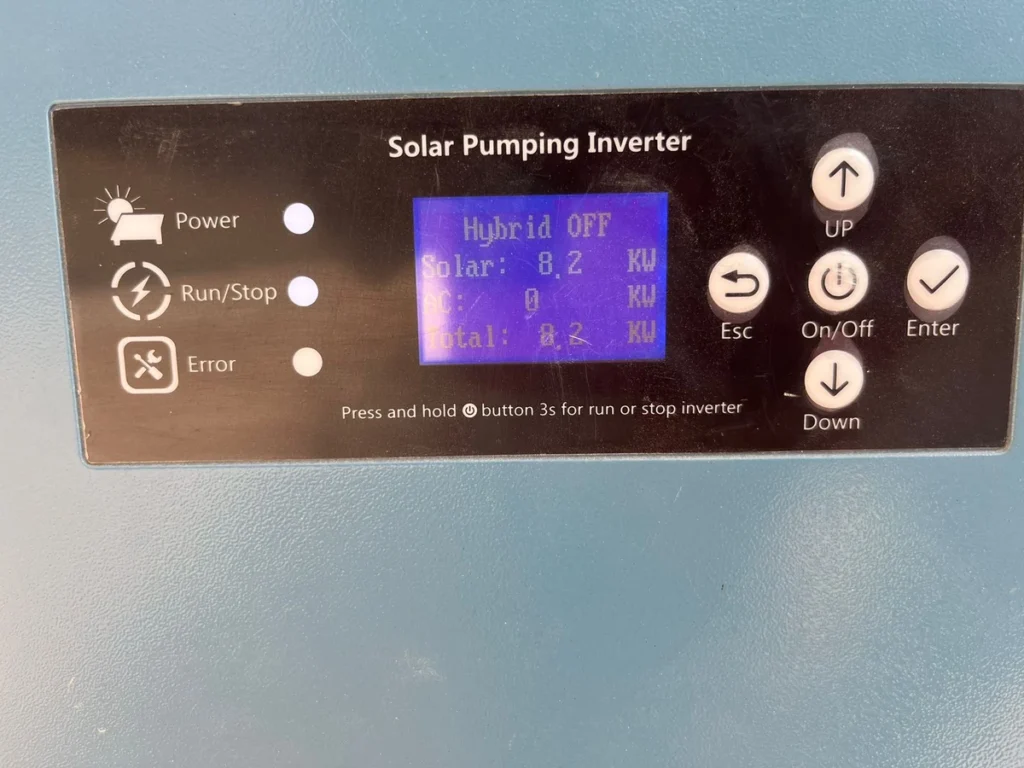
The inverter display in service. -
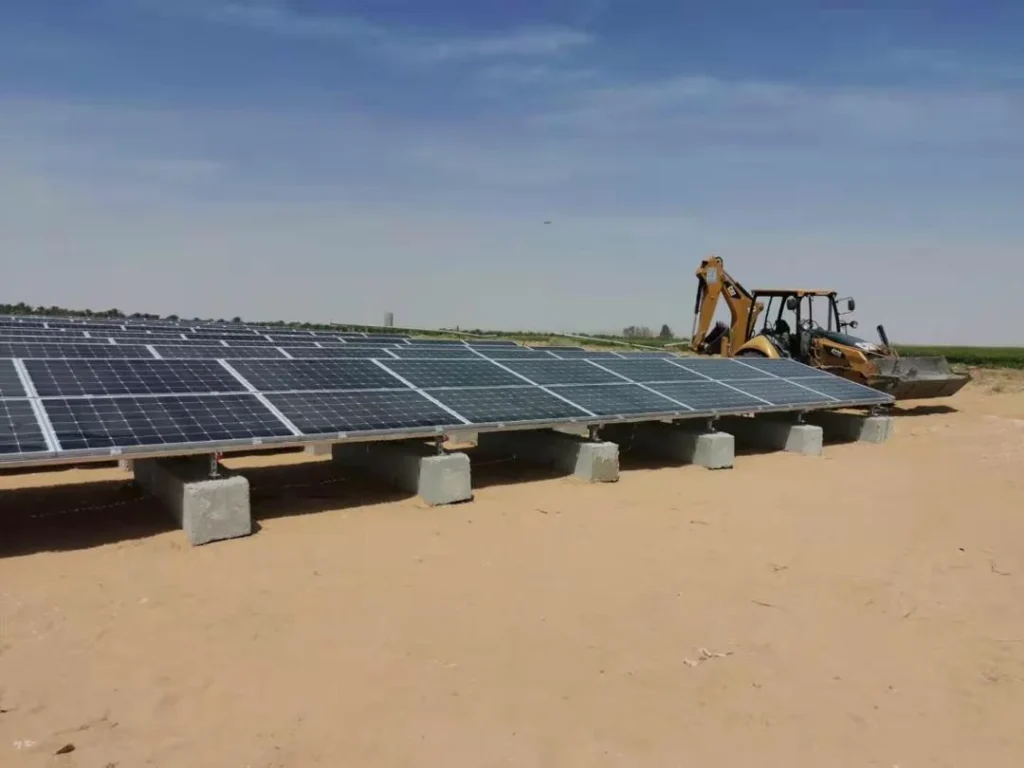
The array at a dry-site installation.
Support
System Matching Support Before Installation
The pump is only one part of a reliable wastewater pumping system.
HOBER works on the system rather than the pump alone, from the project data to commissioning.
-
The system
Solar wastewater and drainage pumping system
- PV array
- Inverter
- Wastewater pump
- Rising main delivery
- Pump Matching Read the flow, the head and what the water carries against the pump performance.
- PV Sizing Configure the PV array according to the pump and the inverter requirements.
- Inverter Matching Match the pump motor voltage, phase and power to the correct solar pumping inverter.
- System Design Coordinate the pump, the inverter, the array, the level control and the system protection.
- Installation Guidance Support wiring, parameter settings and commissioning.
- Troubleshooting Support Technical support for distributors and installers when a site issue occurs.
Support for the people who do the work:
Wastewater projects
Have a Wastewater or Drainage Project?
Send the liquid, what it carries and the head to the discharge point. HOBER can help match the wastewater pump, the solar pumping inverter and the PV configuration for your project.
Project inquiry
The wet well and the duty point
For distributors, installers and project companies. Any figure may be left open — what is missing we confirm with you before the system is quoted.