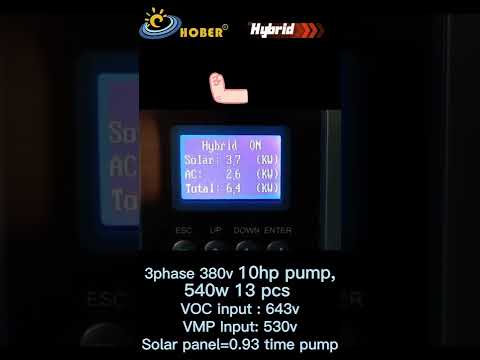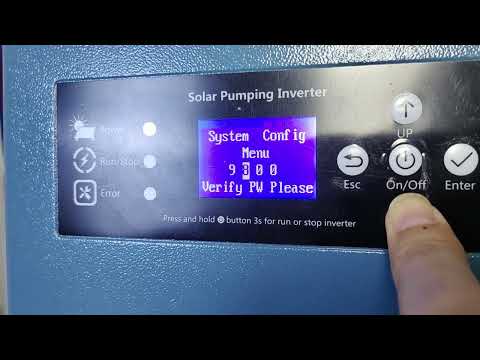

Hober Solar Pump Inverter | Full Catalog & Model List
A walk through the inverter range and the models listed under each series.
Solar pumping inverters
Factory-direct solar pumping inverters to convert compatible AC water pumps to solar, backed by professional pump matching, PV sizing and technical support.
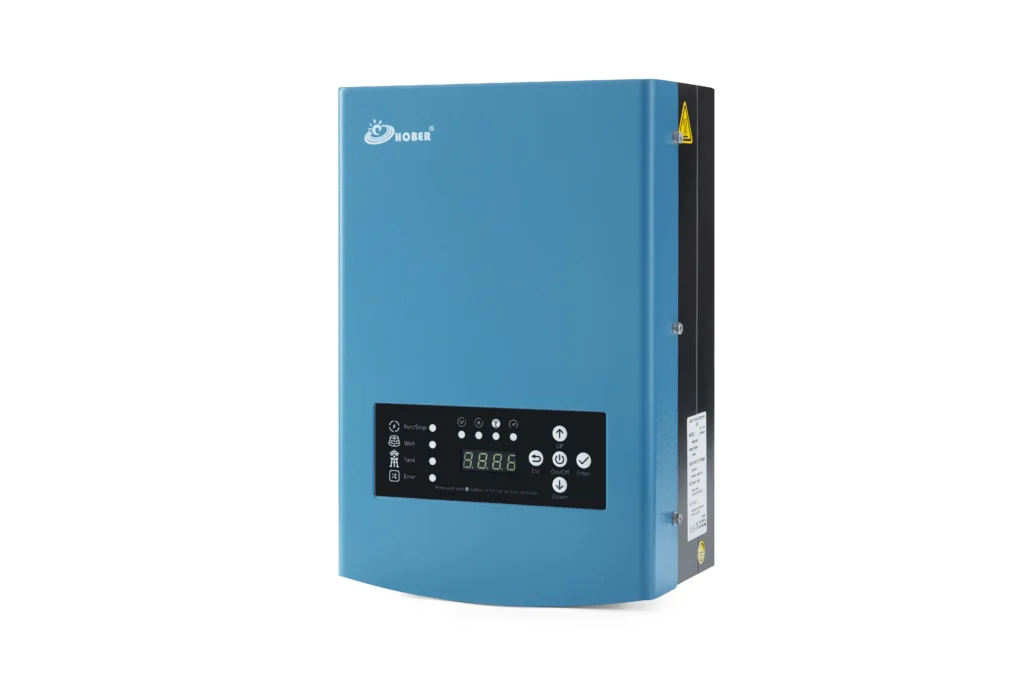
HOBER solar pumping inverter
Why HOBER
Four things a distributor, a pump dealer or an installer checks about the supplier before the inverter is discussed at all.
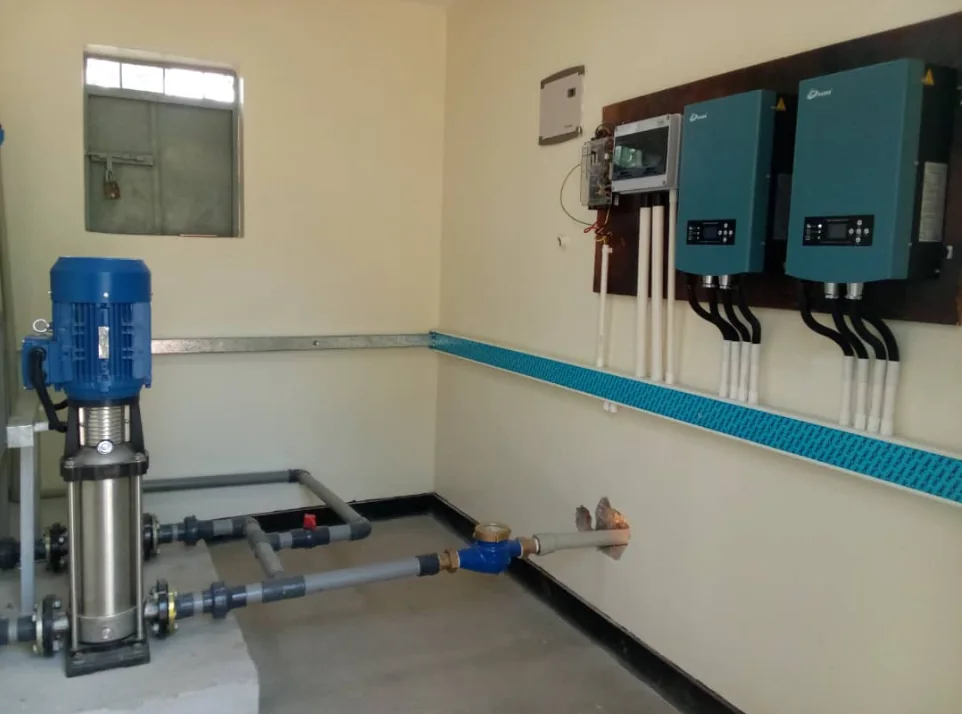
We help distributors and installers match solar pump inverters with AC pump motors and suitable PV configurations.
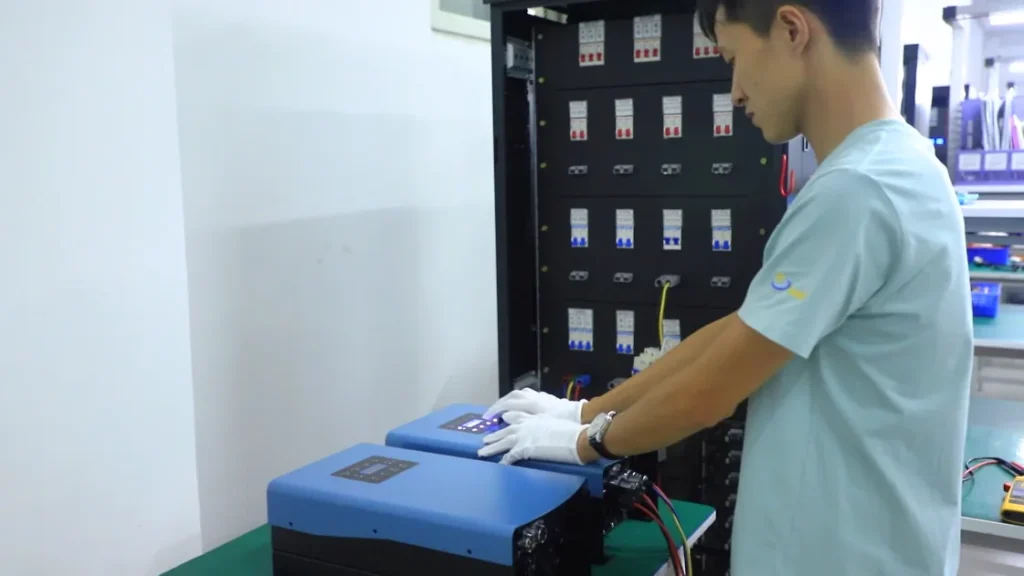
Manufacturing, inspection and product testing processes designed to support consistent product quality.
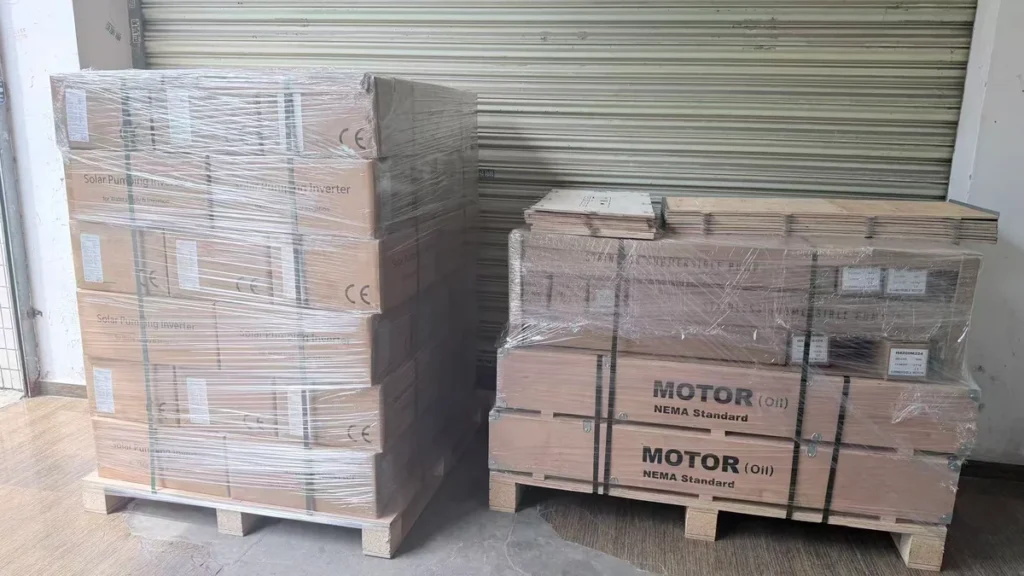
Direct manufacturer supply, bulk orders, product range planning and OEM/ODM support.
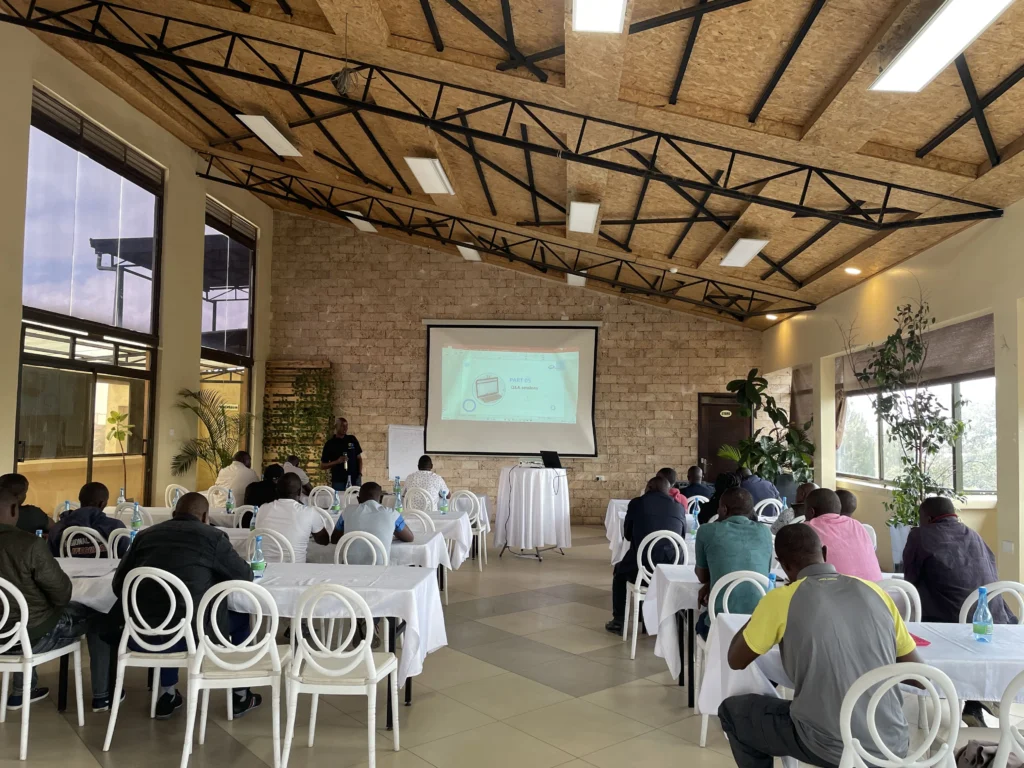
Support for pump selection, PV sizing, wiring, parameter setting, troubleshooting and installation guidance.
Product range
Four families, split by output and enclosure, each with the pump output it covers, the phase and voltage that output is stated at, the enclosure it is delivered in and what it is bought for.
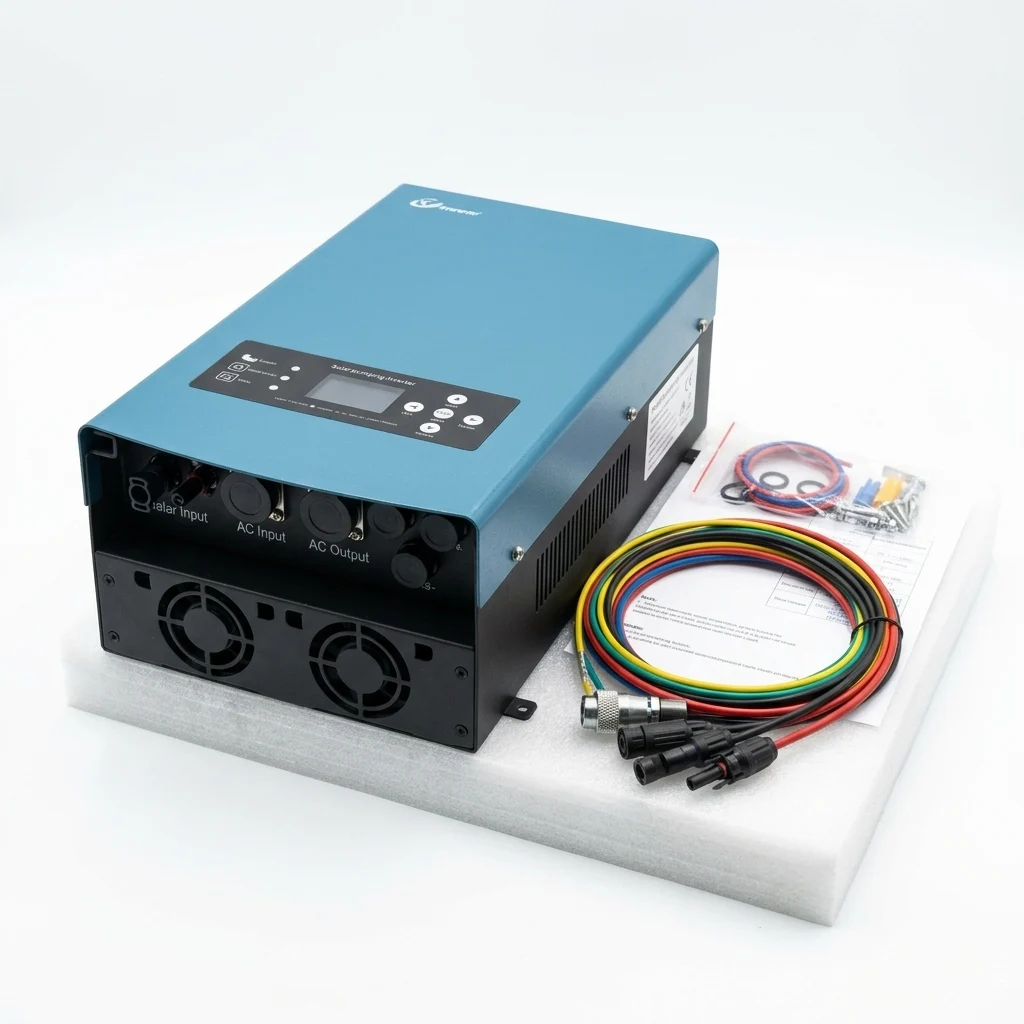
0.75–15 kW
For small pumps, domestic water supply and light irrigation, on a single-phase feed.

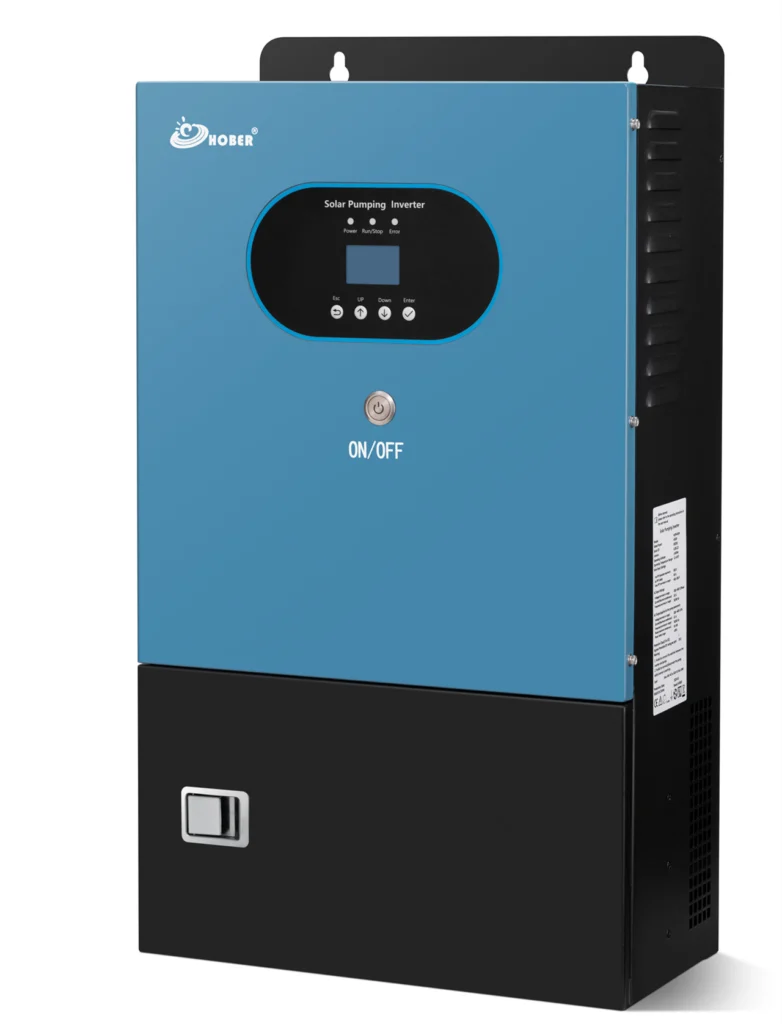
1.5–37 kW
For deep-well pumps, surface pumps and the common irrigation duties, in a wall-mounted enclosure.
45–132 kW
For large irrigation, commercial pumping and water transfer, on a three-phase feed.
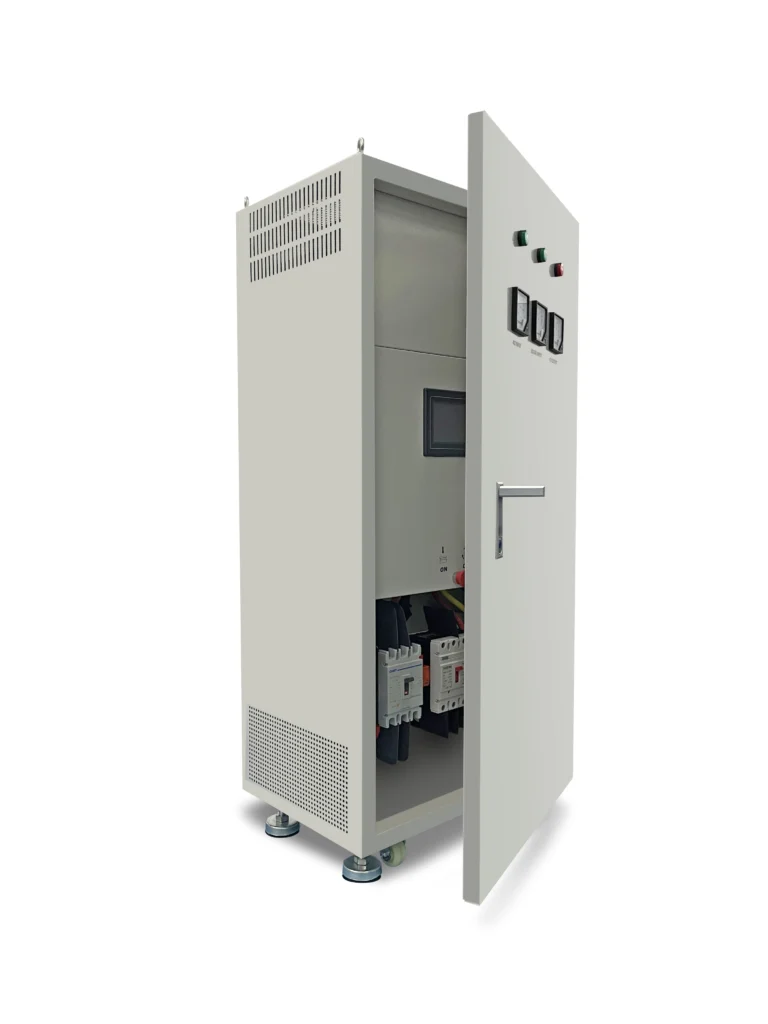
160–500 kW
For pumping stations and project supply, where the drive is delivered as a control cabinet.
The power range is the pump output the family’s models state, and the phase is stated model by model: most of the 220/240 V models state a single- or three-phase output and one states a three-phase output only, while the 380/400/440 V and cabinet families state three-phase throughout.
Compatibility
Keep your compatible AC pump. Let HOBER help you select the right solar pumping inverter and PV configuration.
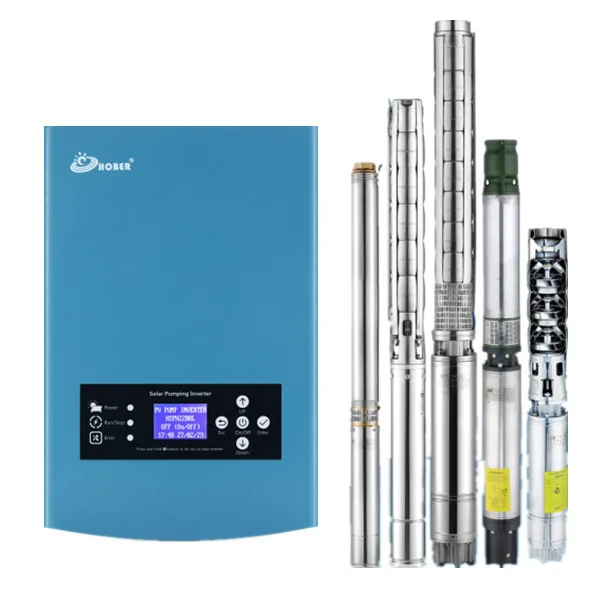
A HOBER solar pumping inverter drives a standard AC induction motor, so the pump stays where it is and the duty decides the flow and the head. These are the six duties the range is bought for.
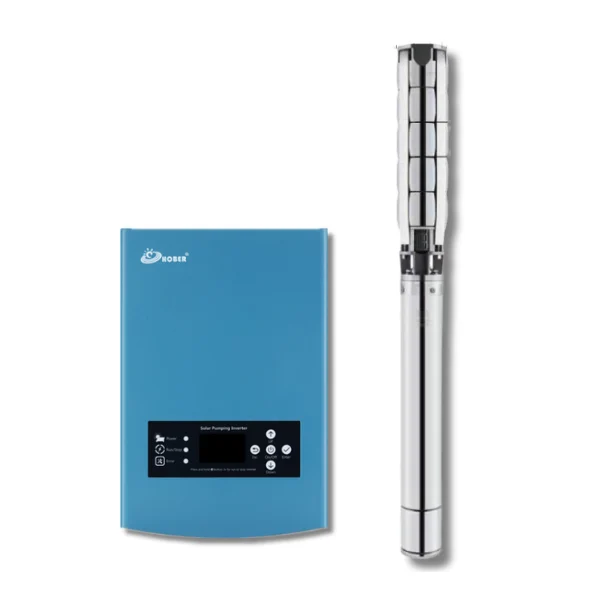
Submersible borehole pumps, matched on the motor nameplate and the lift the well asks for.
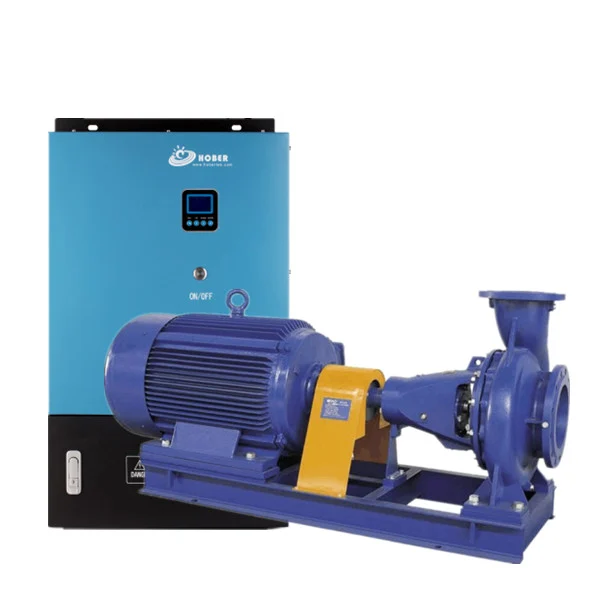
End-suction and horizontal surface pumps drawing from a river, a lake or a tank.
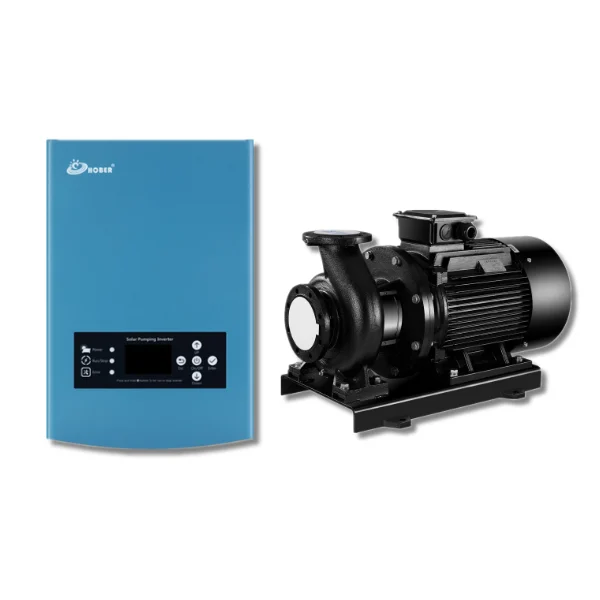
Single-stage stainless centrifugal pumps for transfer and irrigation lines.
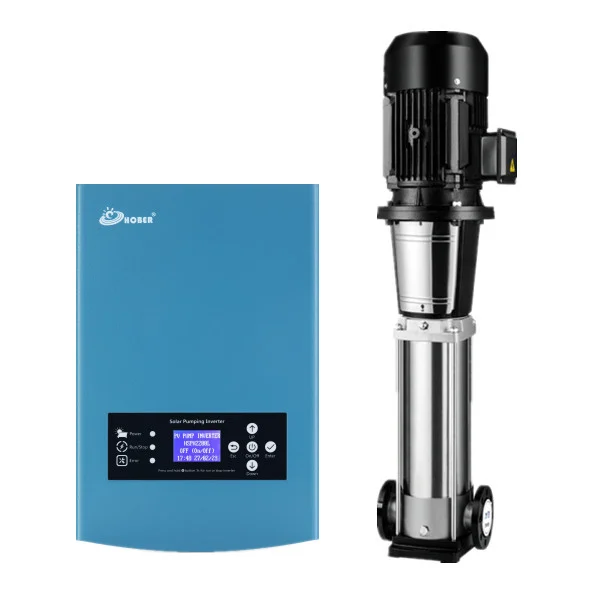
Multistage pumps holding pressure in a pipeline, a tank line or a building supply.
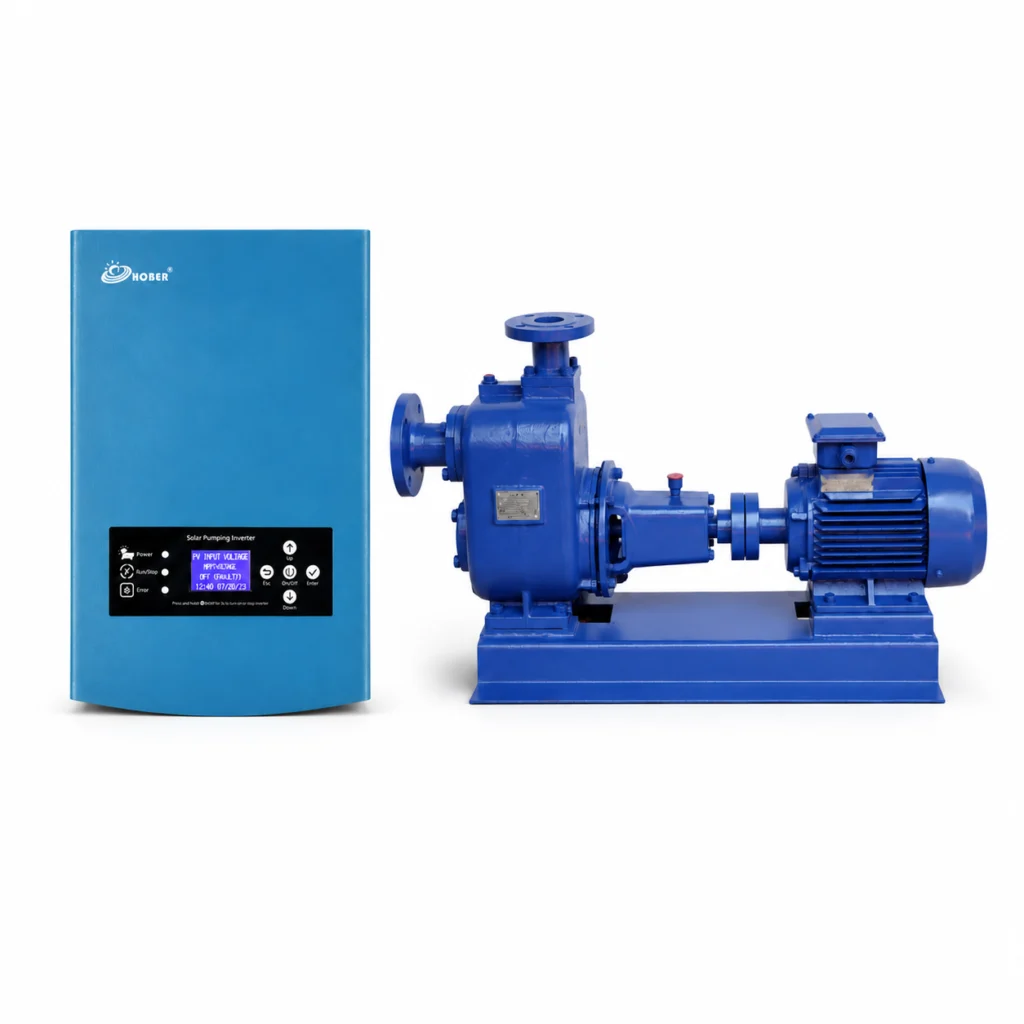
Self-priming surface pumps, for a suction line that has to draw again after a stop.
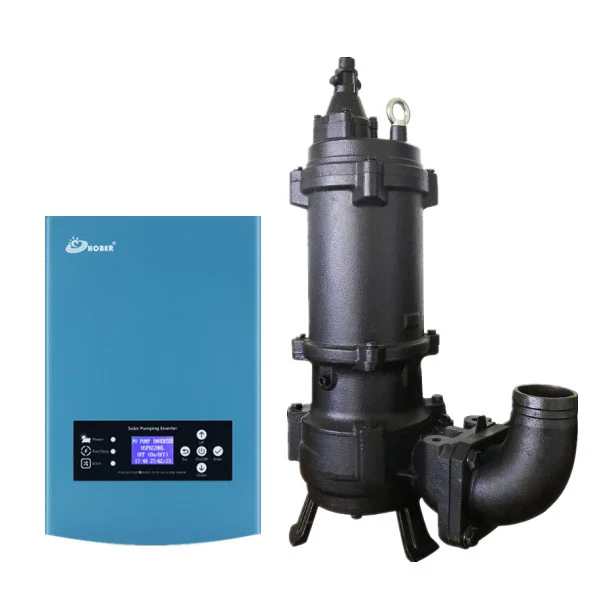
Submersible drainage and sewage pumps in a wet well or on a rising main.
Compatibility is confirmed from the pump nameplate — power, voltage, phase and rated current — rather than from the pump type alone. What the conversion involves, the checks behind it and the data to send are covered under AC Pump Solar Conversion.
Check pump compatibility
Start with your pump — not the inverter.
1 · The pump’s phase
2 · The pump’s rated power
3 · The voltage on the nameplate
4 · How the system is powered
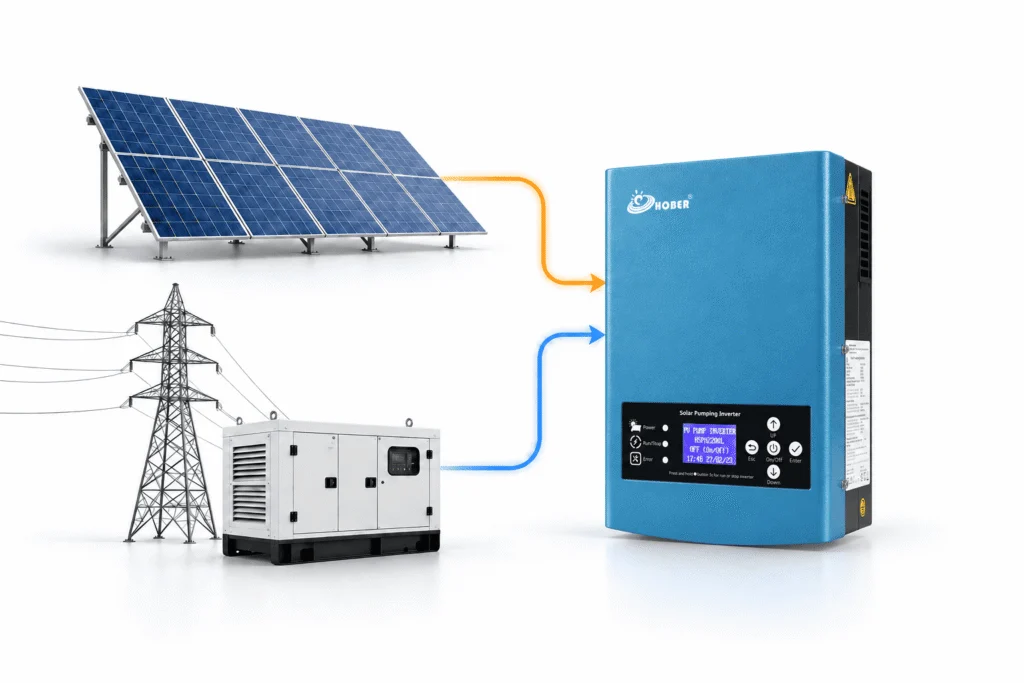
HOBER hybrid inverters take solar first and add grid or generator when solar falls short, so a duty can hold past the solar window without a battery bank.
Series match
11 kW · Three-phase · 380–415 V · IP65
No HOBER solar pumping inverter series states that pump output, so the model is confirmed from the pump’s nameplate rather than guessed.
Quality
What the factory does to keep one batch like the next, and what a distributor can ask to see before a bulk order is placed.
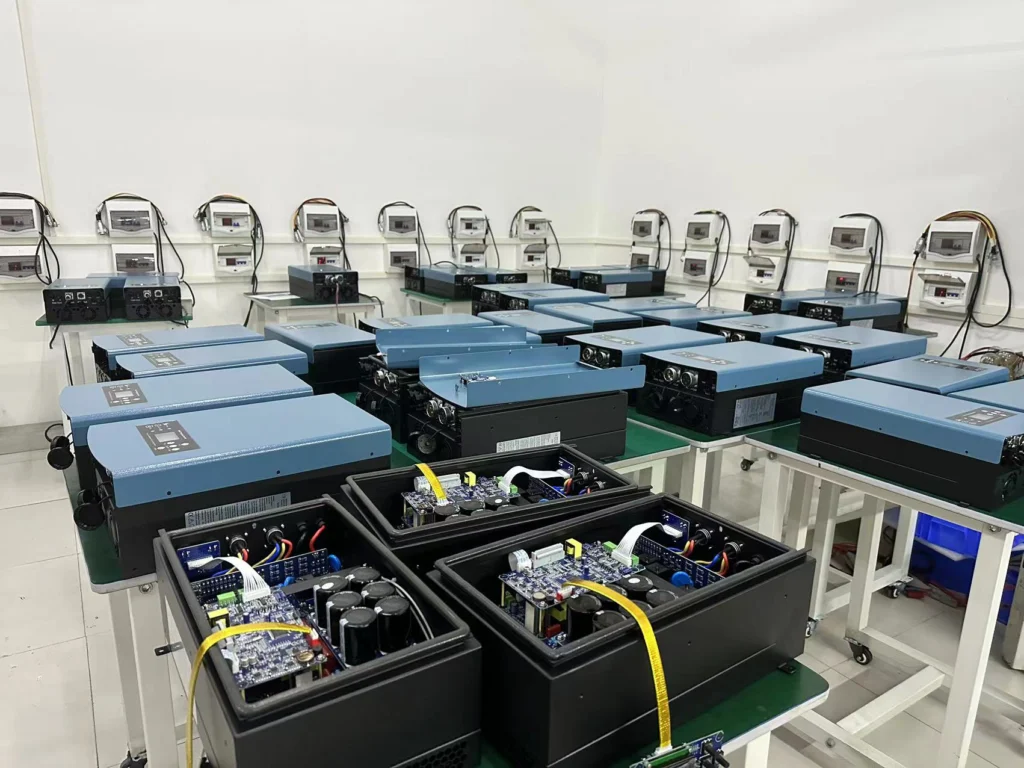
Manufacturing, inspection and product testing processes designed to support consistent product quality, so a repeat order is built like the first one.
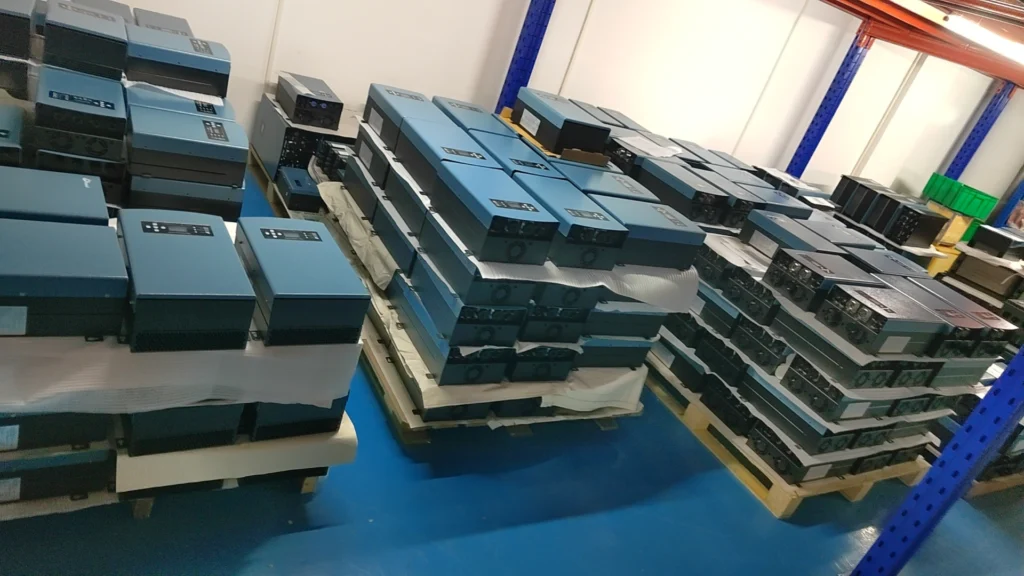
Units are tested and inspected in the workshop before they are packed. Which tests apply to a model is confirmed with the quotation for it.
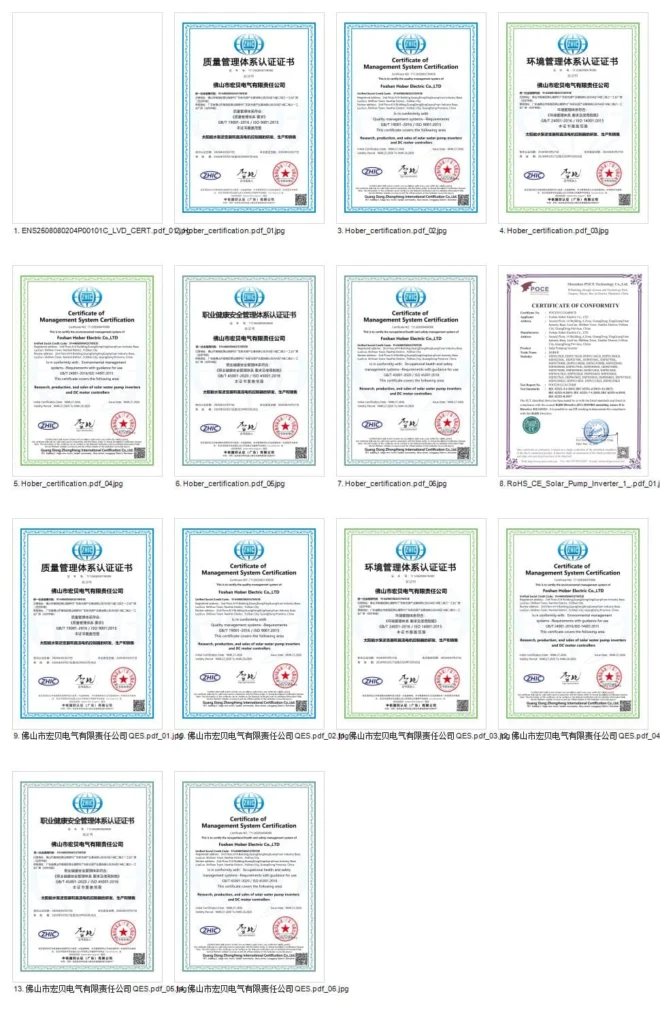
Certificates are issued per product family and per model, and the datasheet and manual are issued per model. Tell us the model and the market you are ordering for, and the documents that apply are confirmed with your order.
Before a bulk order, ask us for:
Technology
The six technologies the range is built around, and what each one changes for the person who has to make the system work in the field.
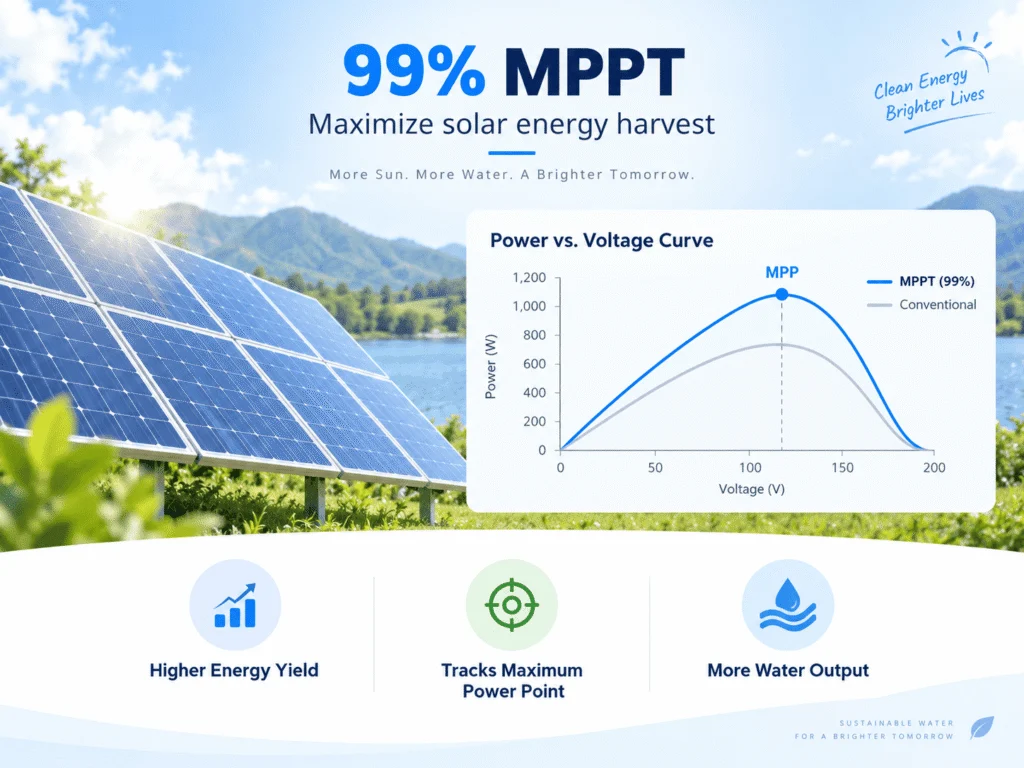
The array’s maximum power point is tracked through the day, so the pump keeps working as the sun moves, clouds pass and the array warms up.
More pumping hours from the array you already sized, with no operator adjusting anything.
On models that state an AC input
Solar is the priority source; on the models that state an AC input, grid or generator power supplements the array when solar falls short and steps back when it recovers.
A duty that has to hold beyond the solar window can do it without a battery bank.
Confirm the start ramp for the model you select
A ramped start and stop puts less load on the motor, the pipework and the supply than switching the pump straight on and off.
A gentler start is easier on a pump that was not chosen for a solar duty, and on a weak grid.

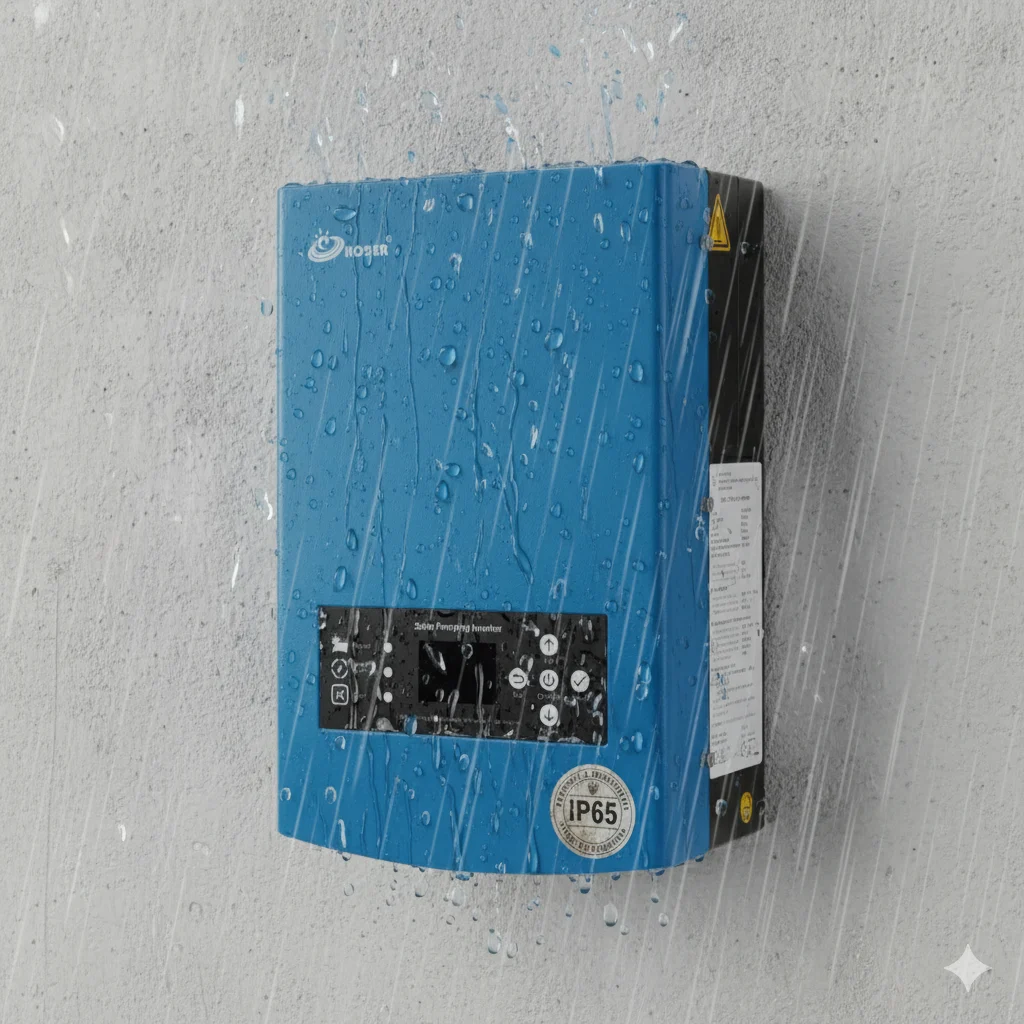
Protection list stated for the wall-mounted models
Dry run detected by sensor or by software, water level control, over- and under-voltage, over-current and over-temperature protection.
A well that runs low stops the pump instead of ending as a burnt motor and a replaced pump.
RS485 on selected models; monitoring link varies by model
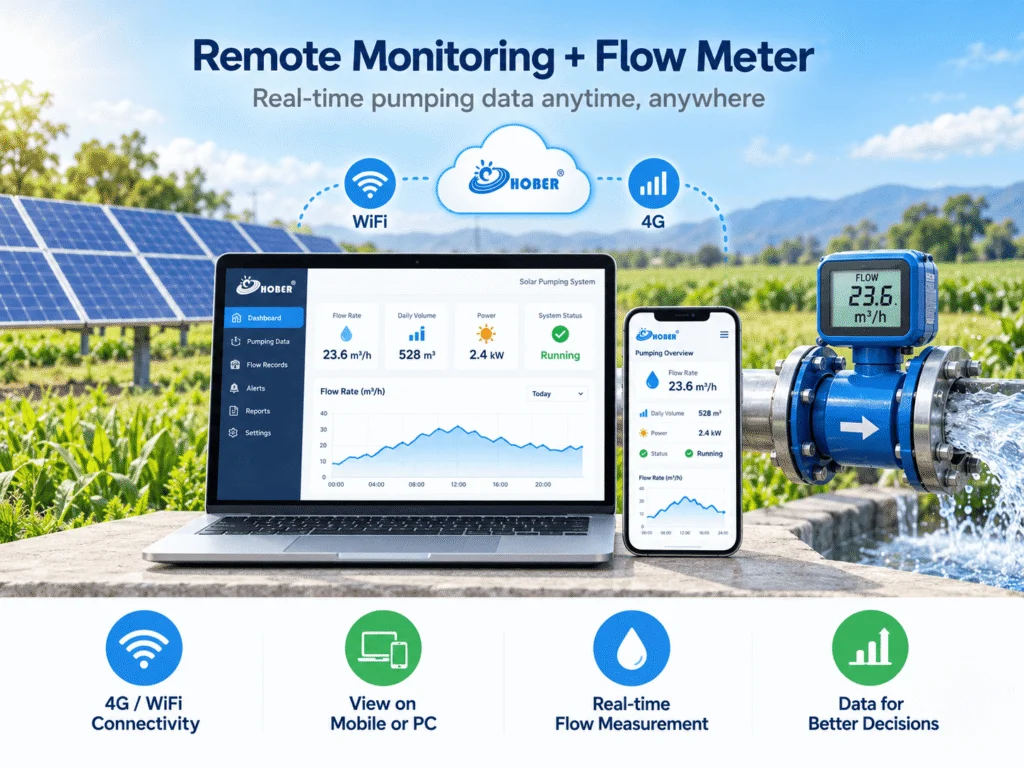
Remote monitoring depends on the model — a 4G/WiFi monitor and controller on most models, GPRS SMS on the 45–132 kW models — and RS485 on the models whose datasheet states it.
A fault can be read before a site visit is booked, which is what keeps a service call from becoming a return trip.
The drive is set up for the pump and the duty point rather than programmed for the site: the operating parameters a matched model needs are set once at commissioning.
Commissioning is a setting rather than a program written on site by whoever is there.
Hybrid power
Hybrid power helps maintain reliable pumping as solar conditions change: solar is the priority source, and an AC feed supplements it when the sun is not enough. Hybrid support is stated model by model.
Solar Priority Hybrid Power Grid Operation
When sufficient solar energy is available, the pump operates mainly from the PV array. Grid power remains on standby.
Illustrative power mix, not a control setting.
When solar power drops, grid or generator power can supplement the array and keep the pump running.
Illustrative power mix, not a control setting.
When solar energy is unavailable, grid or generator power can keep the pump running where the application requires continuous operation.
Illustrative power mix, not a control setting.
Wholesale & distributors
Six things that come with the product when you buy from the factory, all of them aimed at the same result: fewer wrong selections, shorter commissioning and less after-sales pressure.
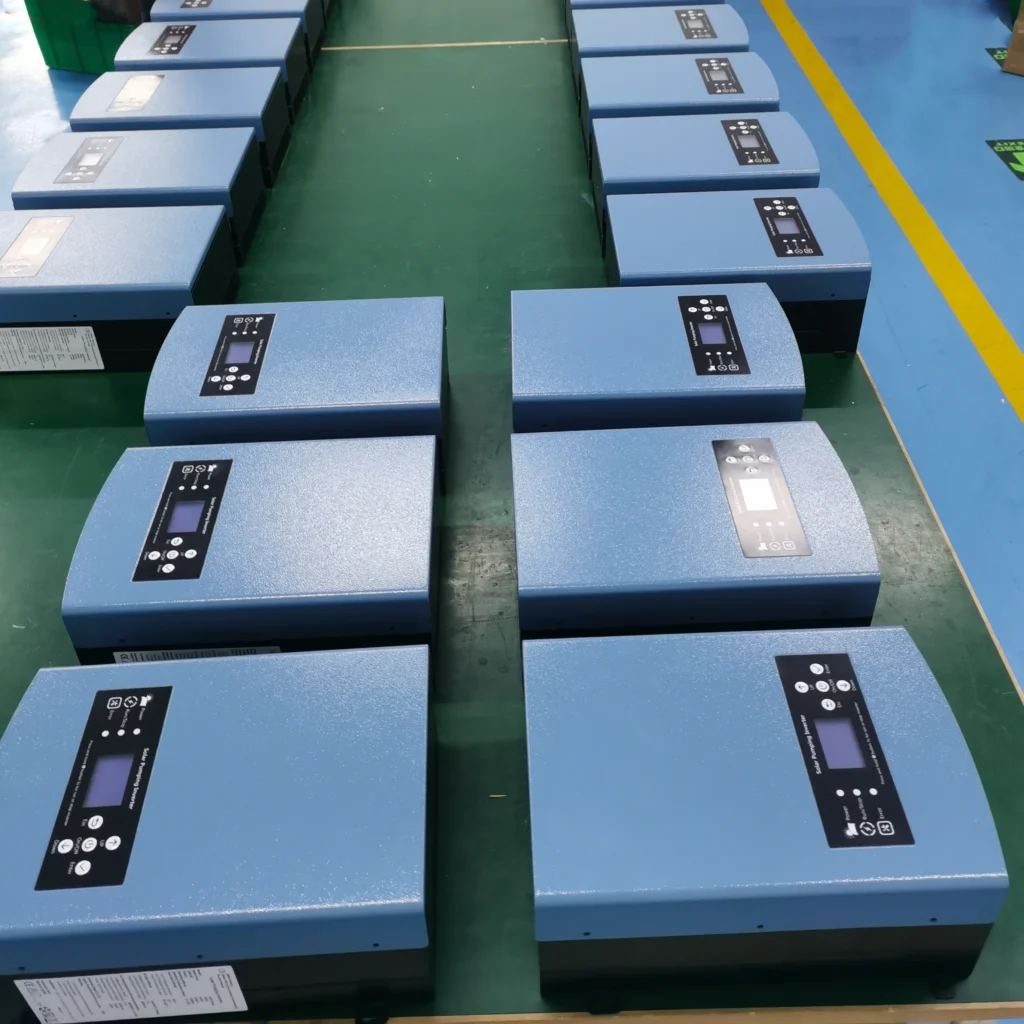
Buying a range is one decision; keeping it working in the field is another. A pump matched to the wrong drive or an array sized on a guess costs more after the sale than the inverter costs to buy — repeated site visits, a pump that trips at noon, and a customer who stops calling. These are the six things HOBER does around the product so that the three of them do not all land on your team.
Technical specifications
The whole range, one model per row: the rated power, output voltage, phase, IP rating, hybrid AC input and solar DC input window the datasheet states for that model. Every row opens the datasheet for that model.
| Model | Rated Power | Output Voltage | Phase | IP Rating | Hybrid AC input | Vmp Min | Voc Max | Full spec |
|---|---|---|---|---|---|---|---|---|
| HSPH750LB | 0.75 kW | 220/240 V | Single / three phase | IP65 | 220/240V 1-Phase | 80V | 450V | Full spec for model HSPH750LB |
| HSPH1500L | 1.5 kW | 220/240 V | Single / three phase | IP65 | 220/240V 1-Phase | 200V | 450V | Full spec for model HSPH1500L |
| HSPH1500LB | 1.5 kW | 220/240 V | Single / three phase | IP65 | 220/240V 1-Phase | 120V | 450V | Full spec for model HSPH1500LB |
| HSPH1500HB | 1.5 kW | 380/400/440 V | Three phase | IP65 | 3 Phase 380/400/440V | 300V | 700V | Full spec for model HSPH1500HB |
| HSPH2200L | 2.2 kW | 220/240 V | Single / three phase | IP65 | 220/240V 1-Phase | 200V | 450V | Full spec for model HSPH2200L |
| HSPH2200HB | 2.2 kW | 380/400/440 V | Three phase | IP65 | 3 Phase 380/400/440V | 300V | 700V | Full spec for model HSPH2200HB |
| HSPH3700L | 3.7 kW | 220/240 V | Single / three phase | IP65 | 220/240V 1-Phase or 3-Phase | 200V | 450V | Full spec for model HSPH3700L |
| HSPH3700H | 3.7 kW | 380/400/440 V | Three phase | IP65 | 3 Phase 380/400/440V | 400V | 900V | Full spec for model HSPH3700H |
| HSPH4000H | 4 kW | 380/400/440 V | Three phase | IP65 | 3 Phase 380/400/440V | 400V | 900V | Full spec for model HSPH4000H |
| HSPH5500L | 5.5 kW | 220/240 V | Single / three phase | IP65 | 220/240V 1-Phase or 3-Phase | 200V | 450V | Full spec for model HSPH5500L |
| HSPH5500H | 5.5 kW | 380/400/440 V | Three phase | IP65 | 3 Phase 380/400/440V | 400V | 900V | Full spec for model HSPH5500H |
| HSPH7500L | 7.5 kW | 220/240 V | Single / three phase | IP65 | 220/240V 1-Phase or 3-Phase | 200V | 650V | Full spec for model HSPH7500L |
| HSPH7500H | 7.5 kW | 380/400/440 V | Three phase | IP65 | 3 Phase 380/400/440V | 400V | 900V | Full spec for model HSPH7500H |
| HSPH9200H | 9.2 kW | 380/400/440 V | Three phase | IP65 | 3 Phase 380/400/440V | 400V | 900V | Full spec for model HSPH9200H |
| HSPH11KL | 11 kW | 220/240 V | Three phase | IP65 | 220/240V 3-Phase | 200V | 650V | Full spec for model HSPH11KL |
| HSPH11KH | 11 kW | 380/400/440 V | Three phase | IP65 | 3 Phase 380/400/440V | 400V | 900V | Full spec for model HSPH11KH |
| HSPH13KH | 13 kW | 380/400/440 V | Three phase | IP65 | 3 Phase 380/400/440V | 400V | 900V | Full spec for model HSPH13KH |
| HSPH15KL | 15 kW | 220/240 V | Single / three phase | IP65 | 220/240V 3-Phase | 200V | 650V | Full spec for model HSPH15KL |
| HSPH15KH | 15 kW | 380/400/440 V | Three phase | IP65 | 3 Phase 380/400/440V | 400V | 900V | Full spec for model HSPH15KH |
| HSPH18.5KH | 18.5 kW | 380/400/440 V | Three phase | IP65 | 3 Phase 380/400/440V | 400V | 900V | Full spec for model HSPH18.5KH |
| HSPH22KH | 22 kW | 380/400/440 V | Three phase | IP65 | 3 Phase 380/400/440V | 400V | 900V | Full spec for model HSPH22KH |
| HSPH26KH | 26 kW | 380/400/440 V | Three phase | IP65 | 3 Phase 380/400/440V | 400V | 900V | Full spec for model HSPH26KH |
| HSPH30KH | 30 kW | 380/400/440 V | Three phase | IP65 | 3 Phase 380/400/440V | 400V | 900V | Full spec for model HSPH30KH |
| HSPH37KH | 37 kW | 380/400/440 V | Three phase | IP65 | 3 Phase 380/400/440V | 400V | 900V | Full spec for model HSPH37KH |
| HSPH45KH | 45 kW | 380/400/440 V | Three phase | IP21 | 3 Phase 380/400/440V | 400V | 900V | Full spec for model HSPH45KH |
| HSPH55KH | 55 kW | 380/400/440 V | Three phase | IP21 | 3 Phase 380/400/440V | 400V | 900V | Full spec for model HSPH55KH |
| HSPH75KH | 75 kW | 380/400/440 V | Three phase | IP21 | 3 Phase 380/400/440V | 400V | 900V | Full spec for model HSPH75KH |
| HSPH100KH | 100 kW | 380/400/440 V | Three phase | IP21 | 3 Phase 380/400/440V | 400V | 900V | Full spec for model HSPH100KH |
| HSPH110KH | 110 kW | 380/400/440 V | Three phase | IP21 | 3 Phase 380/400/440V | 400V | 900V | Full spec for model HSPH110KH |
| HSPH132KH | 132 kW | 380/400/440 V | Three phase | IP21 | 3 Phase 380/400/440V | 400V | 900V | Full spec for model HSPH132KH |
| HSPH160KH | 160 kW | 380/400/440 V | Three phase | IP21 | 3 Phase 380/400/440V | 400V | 900V | Full spec for model HSPH160KH |
| HSPH180KH | 180 kW | 380/400/440 V | Three phase | IP21 | 3 Phase 380/400/440V | 400V | 900V | Full spec for model HSPH180KH |
| HSPH200KH | 200 kW | 380/400/440 V | Three phase | IP21 | 3 Phase 380/400/440V | 400V | 900V | Full spec for model HSPH200KH |
| HSPH220KH | 220 kW | 380/400/440 V | Three phase | IP21 | 3 Phase 380/400/440V | 400V | 900V | Full spec for model HSPH220KH |
| HSPH250KH | 250 kW | 380/400/440 V | Three phase | IP21 | 3 Phase 380/400/440V | 400V | 900V | Full spec for model HSPH250KH |
| HSPH280KH | 280 kW | 380/400/440 V | Three phase | IP21 | 3 Phase 380/400/440V | 400V | 900V | Full spec for model HSPH280KH |
| HSPH315KH | 315 kW | 380/400/440 V | Three phase | IP21 | 3 Phase 380/400/440V | 400V | 900V | Full spec for model HSPH315KH |
| HSPH355KH | 355 kW | 380/400/440 V | Three phase | IP21 | 3 Phase 380/400/440V | 400V | 900V | Full spec for model HSPH355KH |
| HSPH400KH | 400 kW | 380/400/440 V | Three phase | IP21 | 3 Phase 380/400/440V | 400V | 900V | Full spec for model HSPH400KH |
| HSPH450KH | 450 kW | 380/400/440 V | Three phase | IP21 | 3 Phase 380/400/440V | 400V | 900V | Full spec for model HSPH450KH |
| HSPH500KH | 500 kW | 380/400/440 V | Three phase | IP21 | 3 Phase 380/400/440V | 400V | 900V | Full spec for model HSPH500KH |
An em dash marks a figure the source datasheet does not state for that model. Confirm the model against your pump nameplate before ordering.
Support & resources
The checks HOBER makes before recommending a configuration, and the documents, tools and support that come with the range.
PV power, inverter control and AC pump operation in one complete system.
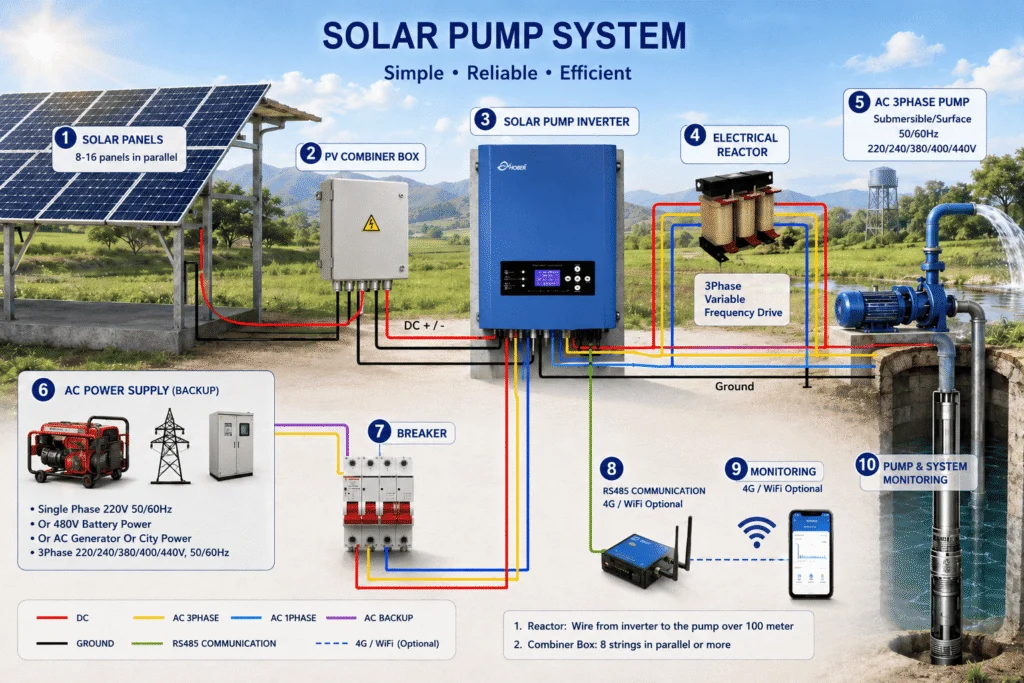
You Send the Pump Data.
We Help Check the System.
HOBER runs the key matching checks before recommending a configuration.
Pump Compatibility
We check the pump power, voltage and application.
Inverter Matching
We select the suitable inverter power and operating range.
PV Configuration
We check the PV voltage and array capacity against the inverter requirements.
Application Conditions
We consider the installation location and the operating requirements before recommending a configuration.
You don’t need to calculate everything yourself.
Send us the pump data and the application requirements. Our team will help check the matching before installation, including the PV configuration for the site.
Reduce Mismatch Risk
Help avoid incorrect pump, inverter or PV matching.
Save Time
Reduce repeated checking and commissioning work.
Stable Operation
Improve overall system matching and operating stability.
Technical Support
Get support from HOBER before and after installation.
The selection tools, the documents and the support behind the product.
Match an inverter to the pump already on site, from the nameplate data.
Select by water source, required flow and head, and get to the PV window the models state.
Catalogs, datasheets, manuals and curves, filed by family and model.
The certificate documents HOBER publishes, and how to ask for the ones that cover your model and market.
Wiring, parameter and commissioning guidance for the installer on site.
A pump that is not running: find the fault before a site visit is booked.
Range planning for stock, selection help for your market and after-sales behind the product.
Tender review, BOQ, system design and commissioning support for projects and EPCs.
Applications
Where HOBER solar pumping inverters are used, from a single irrigation plot to a municipal water supply.
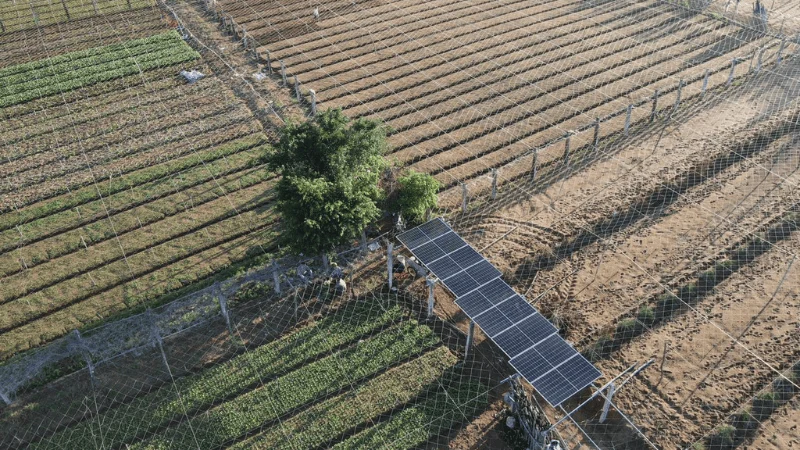
Irrigation pumps driven from the array, matched to the flow and head the plot needs.
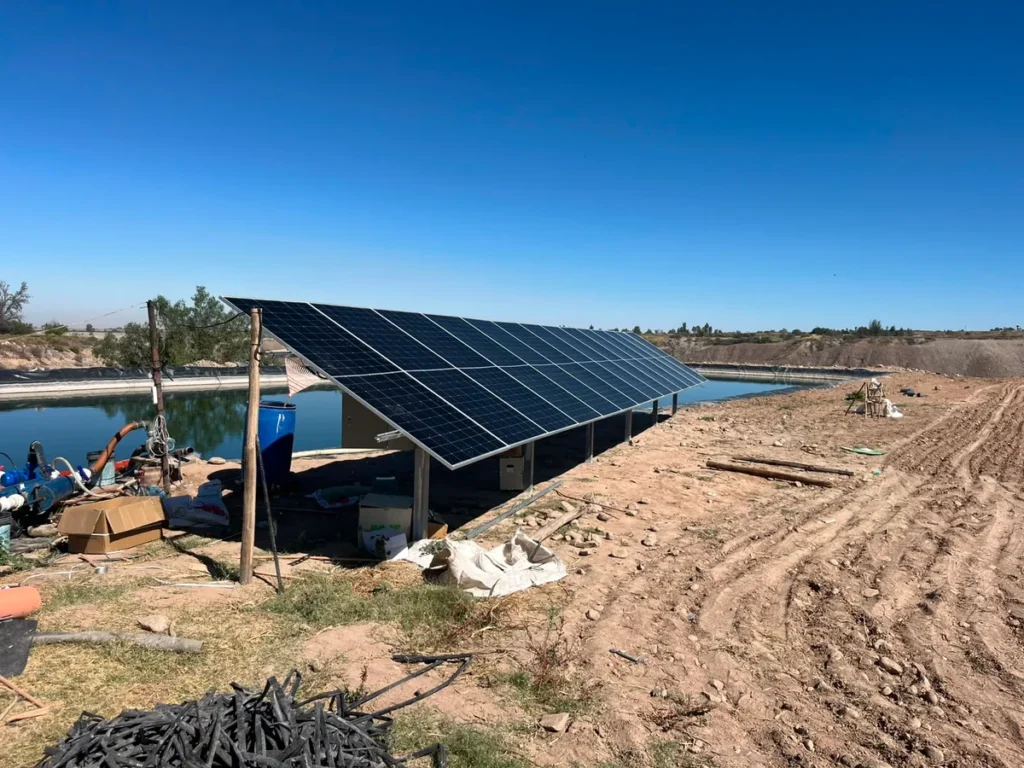
Deep-well submersible pumps supplied from the borehole, with the inverter driving the AC pump already in place.
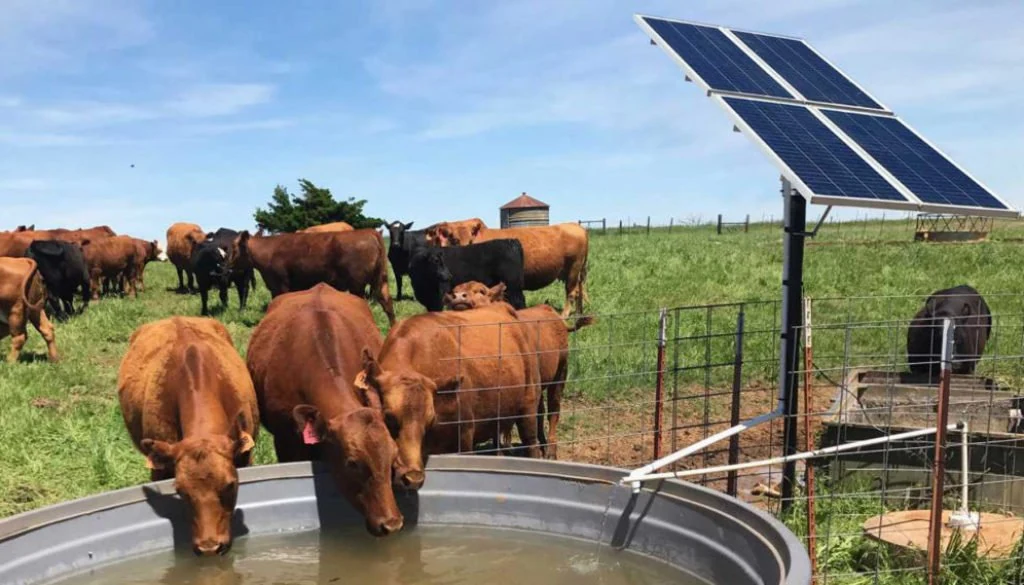
Water supply for pasture and for livestock drinking points.
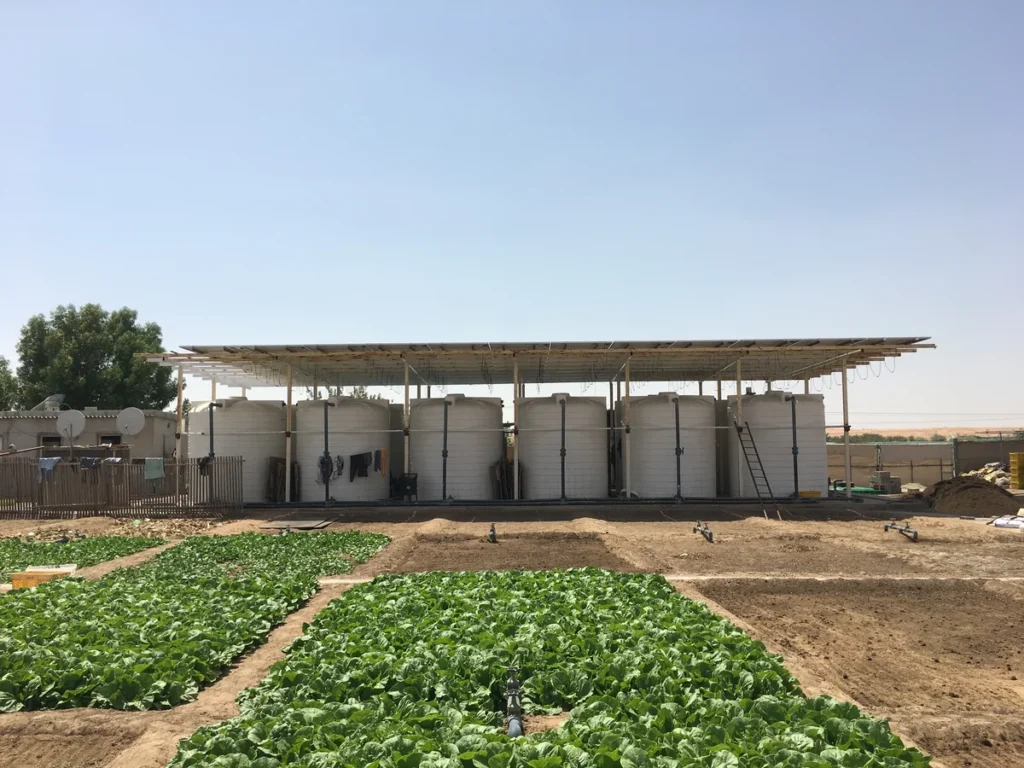
Storage tanks, distribution pipework and booster supply for larger networks.
FAQ
The questions that decide whether a conversion is possible, what it needs, how it is sized and how the array behind it is put together.
In most cases yes, if the pump is a standard AC induction motor whose power, voltage and phase sit inside the range a HOBER inverter states for its AC output. We check the nameplate data before recommending a model, because the inverter is matched to the pump rather than to the array.
Start from the pump’s rated power. Each model states the maximum AC pump power it is adapted for, and the inverter is chosen so the pump sits inside that figure rather than at its edge. Send us the nameplate and we will name the model.
It depends on the pump power, the daily working hours, the local irradiation and the PV window the chosen inverter states. There is no single panel count that suits every site: the array is sized on those four inputs, and we do that sizing with you.
On the models whose datasheet states an AC input, yes. The AC feed supplements the array when solar power falls and disconnects again when it recovers, so the pump keeps running without an operator. Models without that input run on solar alone.
No. The inverter works from the array, and where fitted from the AC input. For pumping, storing water is usually more economical than storing electricity, and it is what most sites do.
Yes. Most of the 220/240 V models state a single-phase pump output and are also stated as compatible with three-phase pumps; the 11 kW model states a three-phase output only. Which of the two applies to your pump is read from its nameplate.
Where a model states remote monitoring, it supports a monitor and controller as an option: a 4G/WiFi module on most models and GPRS SMS on the 45–132 kW models. The cabinet models carry a display and an I/O set of their own. Whether a given model reports, and over which link, is confirmed against the selected model.
Yes. Dry run, detected by sensor or by software, is in the protection list the datasheet prints for the range, together with water level control, over- and under-voltage, over-current and over-temperature.
Yes. The inverter drives the AC motor, and the duty — deep well, surface, booster or wastewater — sets the flow and the head the pump has to hold. The same range drives all four duties, and the pump nameplate decides which model is matched to it.
Pump power, voltage and phase, the pump model if you have it, the required flow, the required head, and the country the project is in. Send them through the inquiry form or by email — a photo of the nameplate answers most of them at once.
A solar pump inverter is built to run a pump from a PV array: it tracks the array’s maximum power point as the sunlight and the module temperature change, so the drive uses the power that is there. An ordinary VFD is built for a mains supply, and it should only be fed from PV where its own manufacturer approves that input and the solar control function. When the array cannot supply enough power, the drive slows, stops in a controlled way or shuts down on protection — which of those applies, and how it returns afterwards, is a fact about the selected model.
Vmp sets the string’s operating voltage, which has to sit inside the drive’s working or MPPT window; Voc sets the highest voltage the string can reach, which is the figure checked against the absolute maximum input voltage. Series-connected module voltages add, and Voc rises as the modules get colder, so that check is made at the site’s lowest expected module temperature from the module data. The drive’s start-up voltage is a third and separate check. A string that meets the array’s wattage can still exceed a voltage limit, so both figures are checked before the array is ordered.
Parallel strings add current: with identical strings the operating currents add, and the short-circuit currents are assessed separately, with the corrections the module instructions require. The limit that matters may apply to one input, to one tracker or to the whole unit, so it is read per model rather than from the array’s wattage, and the combiner, the fuses, the isolators, the connectors and the cable ratings are checked with it. A string count printed on a page is a configuration figure, not permission to add strings.
The DC window states which array voltages the drive can work with; it does not state how much power is there. Start-up voltage, the sustained operating range, the MPPT window and the absolute maximum input voltage are four different figures, and in weak light the voltage can look acceptable while the current and the power are too low to hold the duty the site needs. Whether a lower-voltage drive or a built-in booster suits a site is decided from that site’s energy and hydraulics, not from the window alone.
The pump runs while the array still supplies enough usable power for the drive to start and to hold the duty: the output falls with the light, and the pump stops when it can no longer meet the head it is asked for. More panels raise the available energy, but only inside the limits the selected model states for voltage, input current and array size — and strings added in series and in parallel do not behave alike, so the array is re-checked rather than simply extended. Where water has to be available through long cloudy periods, storage or an approved hybrid input is part of the design instead.
Wholesale and pump matching
Your name, your country and your WhatsApp number are all we need to answer — your company, your email address and your message are optional. The market you sell in, the range you plan to stock and the pump you are converting, where you know them, go in your message.
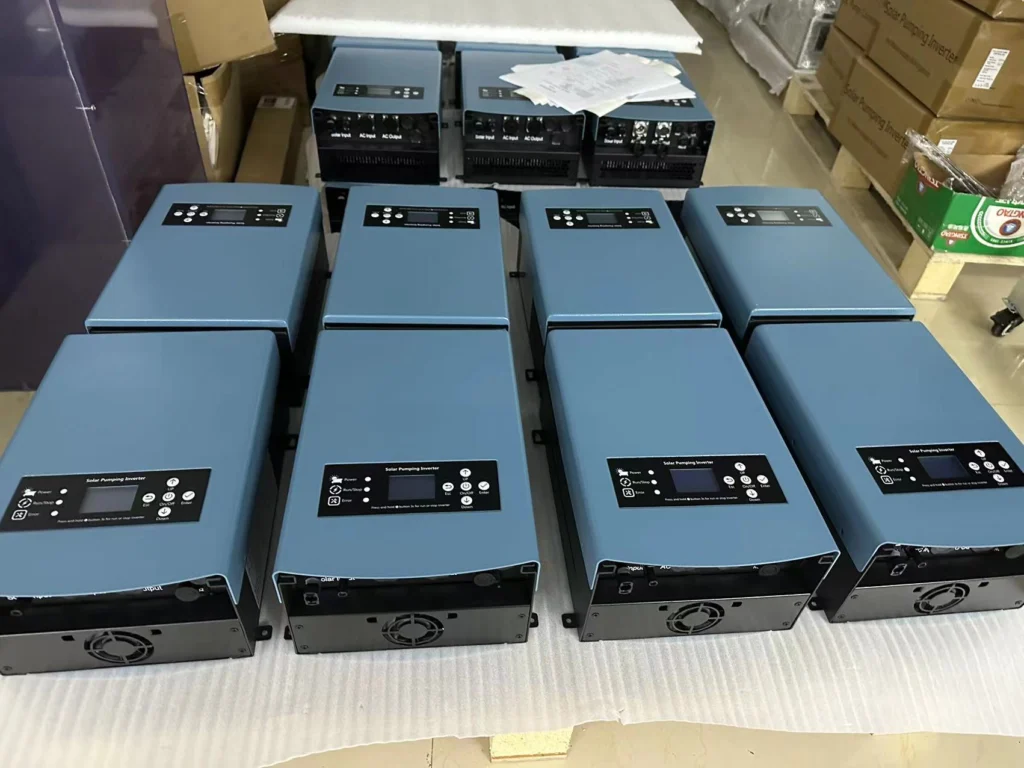
Video library
Product walkthroughs, the settings installers ask about, and the inverter working on site.
A walk through the inverter range and the models listed under each series.
The inverter manual read through on the bench: the terminals, the parameter groups and a first start-up.
Checking the inverter status with a load connected.
Check AC output phase-loss settings and the related inverter configuration.
A longer training session on putting a pump set together, from the array to the water.
Checking the inverter with no pump connected.
Where the low-power protection the inverter applies to the array is set.
Set the inverter AC output frequency for the connected pump motor.
Configure the inverter AC output voltage for the connected water pump.
Using the inverter's hybrid function.
Select the inverter output phase configuration required by the pump motor.
A close look at the HOBER solar pump inverter and its product details.
The remote control the inverter offers from a phone or a computer.
Set the inverter maximum output current according to the pump motor requirements.
Adjust acceleration time for a smoother pump motor start-up.