
How to Monitor and Control a Solar Water Pump System: Flow, Pressure & Remote Monitoring
Quick answer
How a solar pump inverter with an optional flow meter, pressure sensor and 4G/WiFi remote monitoring turns a solar water pumping system into a measurable, controllable and remotely manageable water solution.
Solar water pumping is no longer only about turning a pump on when the sun is available.
For irrigation contractors, pump installers, distributors and water supply projects, several practical questions are becoming increasingly important:
- How much water is the pump actually delivering?
- Is the pipeline pressure stable?
- Can I check the solar pump without visiting the site?
- Can the system record flow, pressure and operating data?
- Can I remotely diagnose a pump system when a customer reports a problem?
A modern solar pump inverter can do much more than convert PV power into AC power for a water pump.
With optional flow meter, pressure sensor and 4G/WiFi remote monitoring, a HOBER solar pump inverter system can provide a more complete solution for water measurement, constant-pressure control and remote system management.
What Can Be Monitored in a Solar Water Pump System?
Depending on the inverter, sensors and communication configuration, a solar pumping system can monitor several types of operating information. These can include:
- Pump running status
- Output frequency
- Voltage and current
- Fault and alarm information
- Real-time water flow
- Accumulated water volume
- Pipeline pressure
- System operating history
This is particularly useful for remote farms, irrigation projects, boreholes and distributed water pumping sites where frequent physical inspection is expensive.
Remote solar-pump monitoring products currently on the market commonly use technologies such as 4G, RS485 and Modbus to collect operating information and make it available through remote platforms.
Why Use a Flow Meter with a Solar Water Pump?
Knowing that a pump is running does not tell you how much water is actually being delivered. This distinction matters.
A pump may be operating normally from an electrical perspective while actual water delivery is lower than expected because of:
- Falling water level
- Pipeline blockage
- Dirty filters
- Partially closed valves
- Pump wear
- Pipeline leakage
- Insufficient pump speed
- Changing system head
A flow meter gives the system direct information about the actual water being delivered. Flow monitoring is commonly used to track water consumption and detect abnormal water delivery conditions.
What Can a Flow Meter Show?
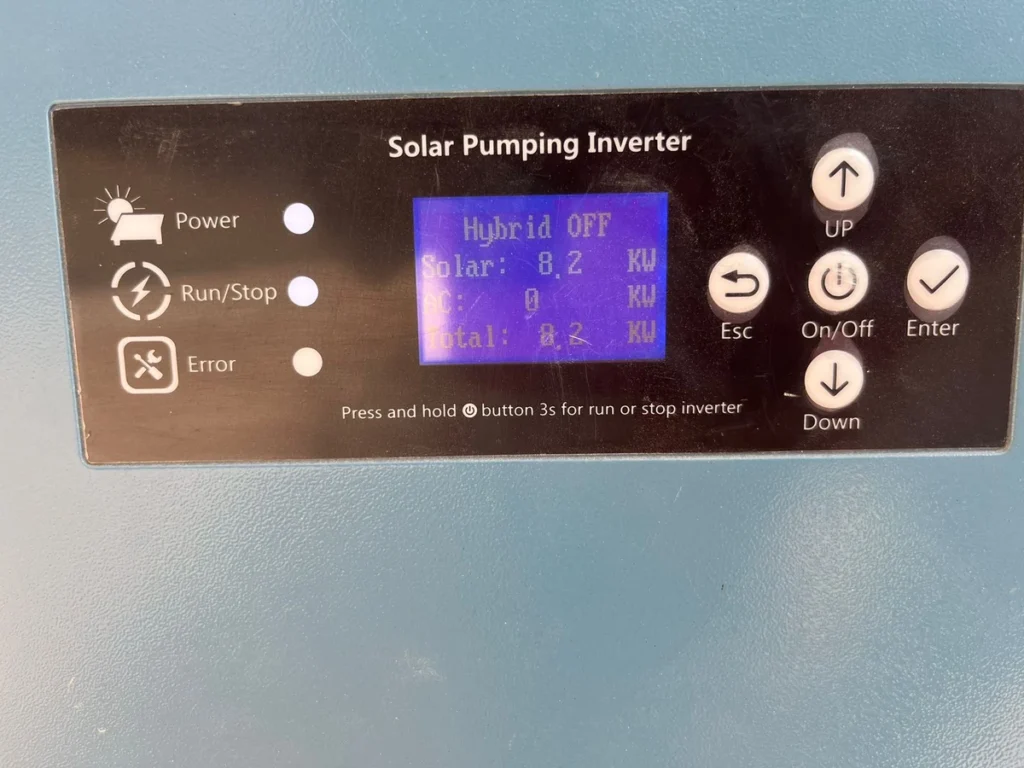
With a compatible 4–20mA flow meter, HOBER solar pump inverter systems can be configured to display information such as:
F-R — Real-Time Flow
For example: 12.5 m³/h
This tells the operator how much water is currently flowing through the pipeline.
T-F — Total Flow
For example: 1,256 m³
This represents accumulated water volume. For irrigation projects, this information is much more useful than simply knowing how many hours the pump has operated.
How Does a Pressure Sensor Control a Water Pump?
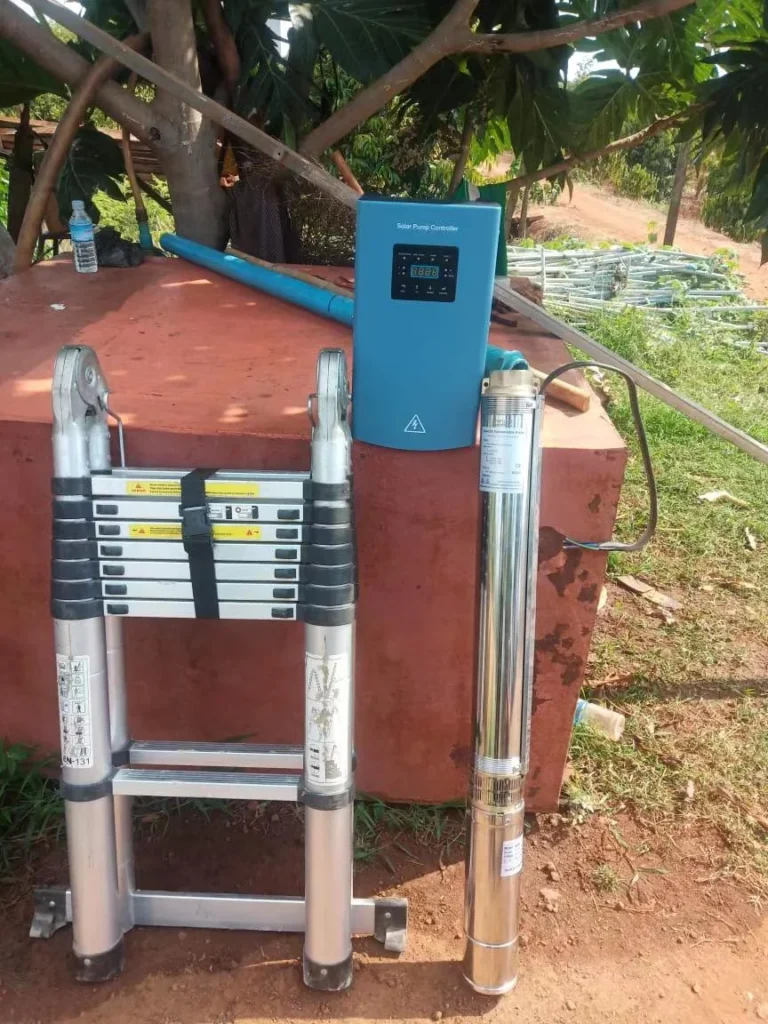
A pressure sensor serves a different purpose. Instead of measuring how much water passes through the pipeline, it measures pipeline pressure. A typical configuration is:
Pressure Sensor → 4–20mA Signal → Solar Pump Inverter → Pump Speed Adjustment
The inverter compares the measured pressure with the target pressure.
If pressure is too low: pump frequency increases → pump speed increases → pressure rises.
If pressure is too high: pump frequency decreases → pump speed decreases → pressure falls.
This creates a closed-loop pressure control system. This type of VFD control using a pressure sensor and PID feedback is a standard engineering approach for variable-speed pumping systems.
What Is Constant Pressure Control?
Suppose an irrigation system requires a target pressure of 0.30 MPa. The operator sets 0.30 MPa as the target. The pressure sensor continuously sends actual pipeline pressure to the inverter. The inverter’s PI/PID control then adjusts the pump frequency automatically to keep the pressure close to the target.
Conceptually: Target Pressure → Compare → Actual Pressure → Adjust Pump Frequency → Maintain Pressure
This is especially useful for:
- Drip irrigation
- Sprinkler irrigation
- Booster pump systems
- Farm water distribution
- Greenhouses
- Pressurized irrigation networks
- Commercial water supply
Instead of operating the pump continuously at full speed, the system responds to actual water demand.
Can a 4–20mA Pressure Sensor Be Connected to a VFD?
Yes—if the VFD or solar pump inverter provides a compatible analog current input and the sensor specification matches the input requirements.
4–20mA is widely used for industrial sensor feedback because the signal can be integrated into VFD closed-loop control systems. Current VFD installation guides commonly show 4–20mA pressure transmitters connected to analog inputs for PID pressure control.
HOBER solar pump inverter systems can support optional 4–20mA pressure and flow sensor inputs on applicable configurations. However, the sensor range and inverter parameters still need to be configured correctly. Simply connecting a sensor does not automatically create an optimized constant-pressure system.
Do I Need a PLC for Constant Pressure Pump Control?
Not necessarily.
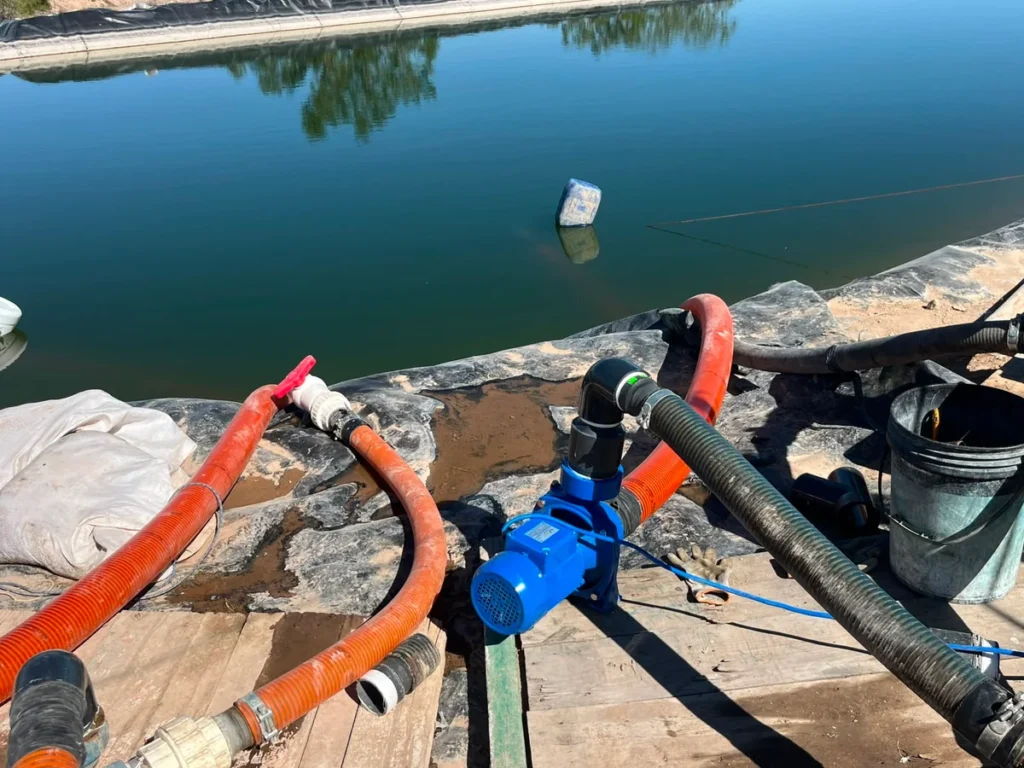
If the solar pump inverter already supports 4–20mA analog input, pressure feedback, PI/PID control, target pressure setting and frequency adjustment, the inverter itself can perform the basic closed-loop pressure control.
A PLC may still be appropriate for more complex projects involving multiple pumps, valves, sequencing, SCADA integration or advanced automation. But for a straightforward single-pump constant-pressure application, adding a PLC may introduce unnecessary cost and complexity.
How Can I Monitor a Solar Water Pump Remotely?
This becomes especially important for B2B installers. Imagine an installer has 50 solar pumping systems distributed across different farms. A customer calls and says: “The pump is not delivering enough water.”
Without remote information, the installer may need to send a technician to the site simply to determine what is happening. Remote monitoring changes this workflow.
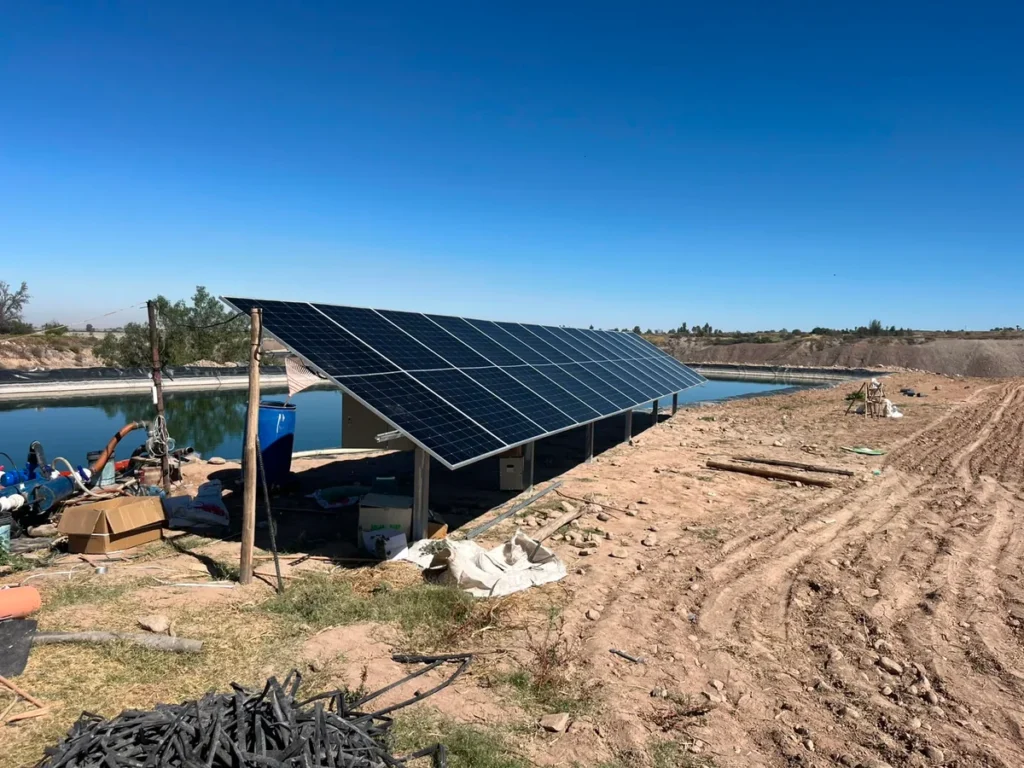
HOBER solar pump inverter systems can support optional 4G/WiFi remote monitoring, depending on the selected inverter and project configuration. Remote monitoring is already an established feature category in solar pumping equipment; current market systems use WiFi, GPRS/4G and communication interfaces such as RS485/Modbus for remote supervision and diagnostics.
What Information Can Be Checked Remotely?
Depending on the system configuration, remote monitoring can provide access to information such as:
- Pump operating status — is the pump running or stopped?
- Operating frequency — at what frequency is the inverter currently driving the pump?
- Electrical information — voltage, current and other operating parameters can help diagnose electrical conditions.
- Fault information — instead of asking the customer to describe what appears on the inverter display, the technical team can use available system information to identify the fault more efficiently.
- Historical information — historical operating data can be particularly valuable when a problem occurs intermittently.
This is one of the important differences between local display and remote monitoring. The technician is not limited to “What is happening now?” — the system can potentially help answer “What happened before the problem occurred?”
Commercial remote solar-pump monitoring systems already emphasize historical data, fault analysis and remote diagnostics as core functions.
Can Flow and Pressure Be Monitored Remotely?
This depends on the specific sensor, inverter and monitoring configuration. The system architecture can be designed as:
Flow Meter → 4–20mA / Pressure Sensor → 4–20mA → HOBER Solar Pump Inverter → 4G / WiFi → Remote Monitoring Platform
This creates an important distinction: the flow meter and pressure sensor are the measurement layer; the solar pump inverter is the control layer; 4G/WiFi communication provides the remote connectivity layer. Together, these technologies can turn a conventional solar pumping installation into a more visible and manageable water system.
What Happens to Constant Pressure When Solar Power Changes?
This is one of the most important questions in a solar constant-pressure system. Solar energy is variable. Pipeline pressure demand may not be. For example, the irrigation network may require 0.30 MPa while cloud cover suddenly reduces available PV power. If the PV array cannot provide enough power, the inverter cannot create energy that is not available.
Therefore: adding a pressure sensor does not guarantee constant pressure under every solar condition. This is a system-design issue rather than a sensor issue. The system designer needs to consider:
- Pump power
- Pump curve
- Required flow
- Required pressure
- Total Dynamic Head
- PV array sizing
- Irrigation demand
- Available solar irradiation
For applications where maintaining pressure is critical even during weak sunlight, a hybrid power configuration should be considered.
Why Use Solar + Grid Hybrid Power for Constant Pressure?
A hybrid solar pump inverter can prioritize available solar energy while using the grid or another compatible backup source when additional power is required. The operating principle is:
- Good sunlight → maximize solar utilization
- Insufficient solar → supplementary power maintains operation
This is particularly relevant for constant-pressure systems because irrigation demand does not necessarily follow solar irradiance. The objective is therefore not simply “run the pump with solar.” It becomes: use as much solar energy as possible while maintaining the required water service.
Flow Meter vs Pressure Sensor vs Remote Monitoring: What Is the Difference?
| Function | What It Answers | Main Application |
|---|---|---|
| Flow Meter | How much water is flowing? | Water measurement |
| Pressure Sensor | Is pipeline pressure correct? | Constant-pressure control |
| Remote Monitoring | What is happening at the site? | Remote operation & diagnostics |
| Hybrid Supply | What happens when solar is insufficient? | Operating continuity |
They are complementary functions rather than replacements for each other.
Does Every Solar Pump System Need Flow and Remote Monitoring?
No. For a simple borehole application where the objective is only “Pump water → Fill tank → Stop when tank is full,” a standard solar pumping configuration may already be sufficient. Adding a flow meter, pressure sensor and remote monitoring would increase cost without necessarily creating enough value.
These options become more useful for:
- Commercial irrigation — where flow and pressure directly affect irrigation performance.
- Remote installations — where site visits are expensive.
- Distributors and installers — who need faster after-sales diagnostics.
- EPC and water projects — where operating data and water delivery may need to be recorded.
- Multiple-site installations — where centralized monitoring can reduce maintenance workload.
The correct approach is therefore not “add every available function.” It is: add the functions required by the hydraulic system and the customer’s operating model.
How to Choose the Right Monitoring Configuration
Before selecting a solar pumping monitoring solution, provide the following project information:
- Water source — borehole, river, reservoir, tank or other source.
- Pump information — power, voltage, phase, rated current and pump curve if available.
- Required flow — for example, 20 m³/h.
- Total Dynamic Head — for example, 80 m.
- Required pipeline pressure — if constant-pressure operation is needed.
- Power source — solar only or solar + grid/generator.
- Monitoring requirements — flow, total water volume, pressure, remote monitoring or a combination.
HOBER can then help match the pump, solar pump inverter, PV array and optional monitoring functions as one system.
Project step
Need flow data, constant pressure or remote monitoring on a pumping project?
Send the water source, the required flow, the total head and the pump voltage — HOBER answers with a matched configuration.
FAQ: Solar Pump Flow, Pressure and Remote Monitoring
Can I see how many cubic meters of water my solar pump produces?
Yes. With an appropriate flow meter and compatible inverter configuration, real-time flow and accumulated water volume can be measured.
Can a solar pump maintain constant water pressure?
Yes, provided the inverter supports pressure feedback and PI/PID control and sufficient input power is available. A pressure sensor provides feedback while the inverter adjusts pump frequency.
What signal does the pressure sensor use?
Industrial pumping systems commonly use 4–20mA pressure transmitters for VFD feedback.
Can I monitor my solar pump from my phone or computer?
A solar pump inverter equipped with a compatible 4G/WiFi remote monitoring system can transmit operating information to a remote platform. Similar functionality is currently offered by multiple solar-pump inverter and monitoring systems.
Can remote monitoring reduce after-sales costs?
For distributors and installers, the primary benefit is faster preliminary diagnosis. If operating parameters and fault information can be checked remotely, some issues can be identified before deciding whether an on-site visit is necessary.
Do I need both a flow meter and pressure sensor?
Not always. A flow meter measures water delivery, while a pressure sensor measures pipeline pressure and can provide feedback for constant-pressure control. The required configuration depends on the application.
Build the Solar Pump System Around the Application
A solar pump inverter should not be selected only by matching its kW rating to the pump. For professional solar pumping projects, the complete system should consider: Pump Matching + PV Sizing + Hydraulic Requirements + Control + Monitoring.
HOBER helps pump distributors, solar installers and project contractors convert AC pumps to solar and configure the complete pumping system according to the actual application. For projects requiring flow monitoring, constant-pressure control or remote monitoring, send us your pump specifications, required flow, total head and application requirements.
HOBER — Solarize Your AC Pump.